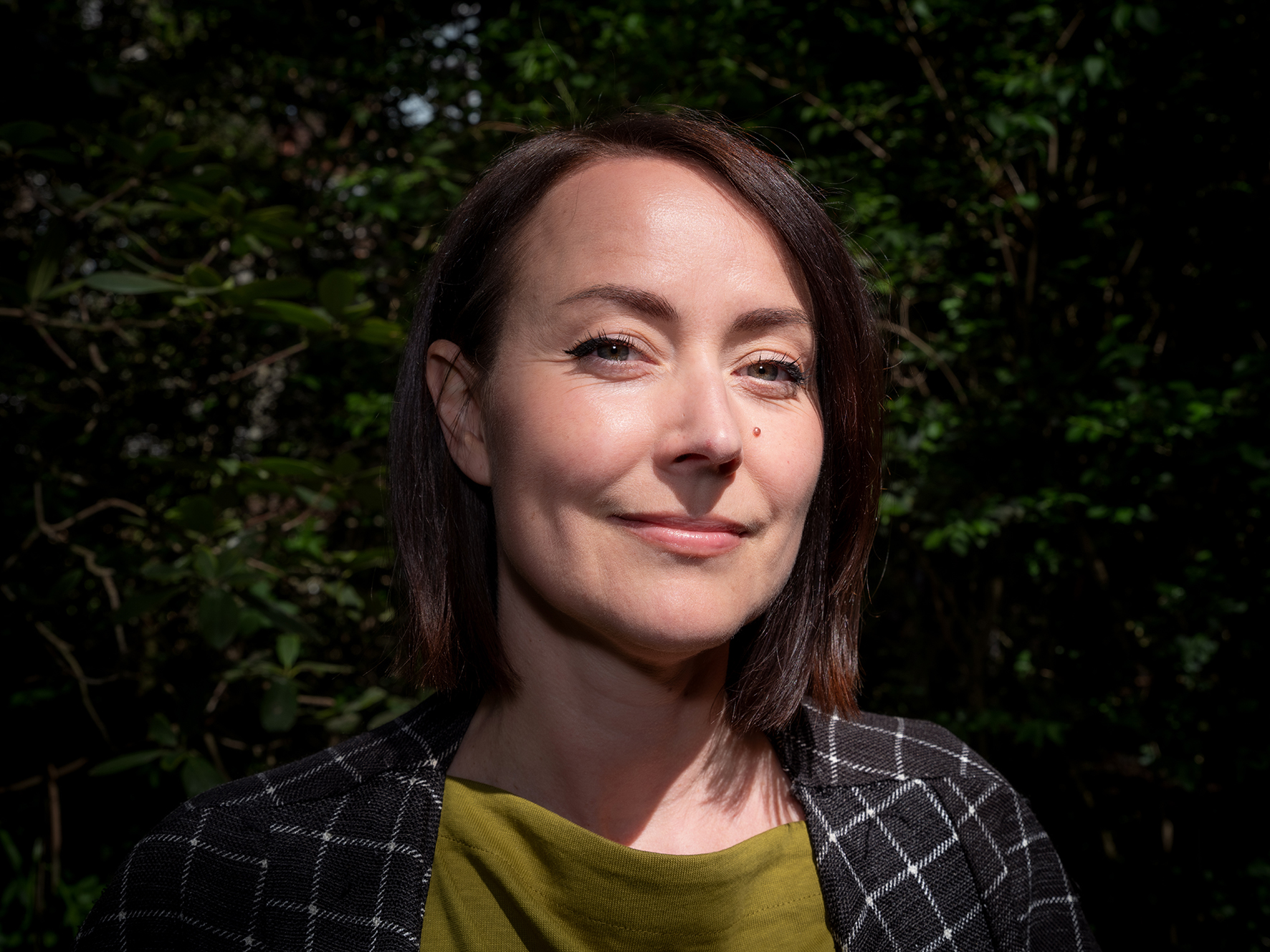
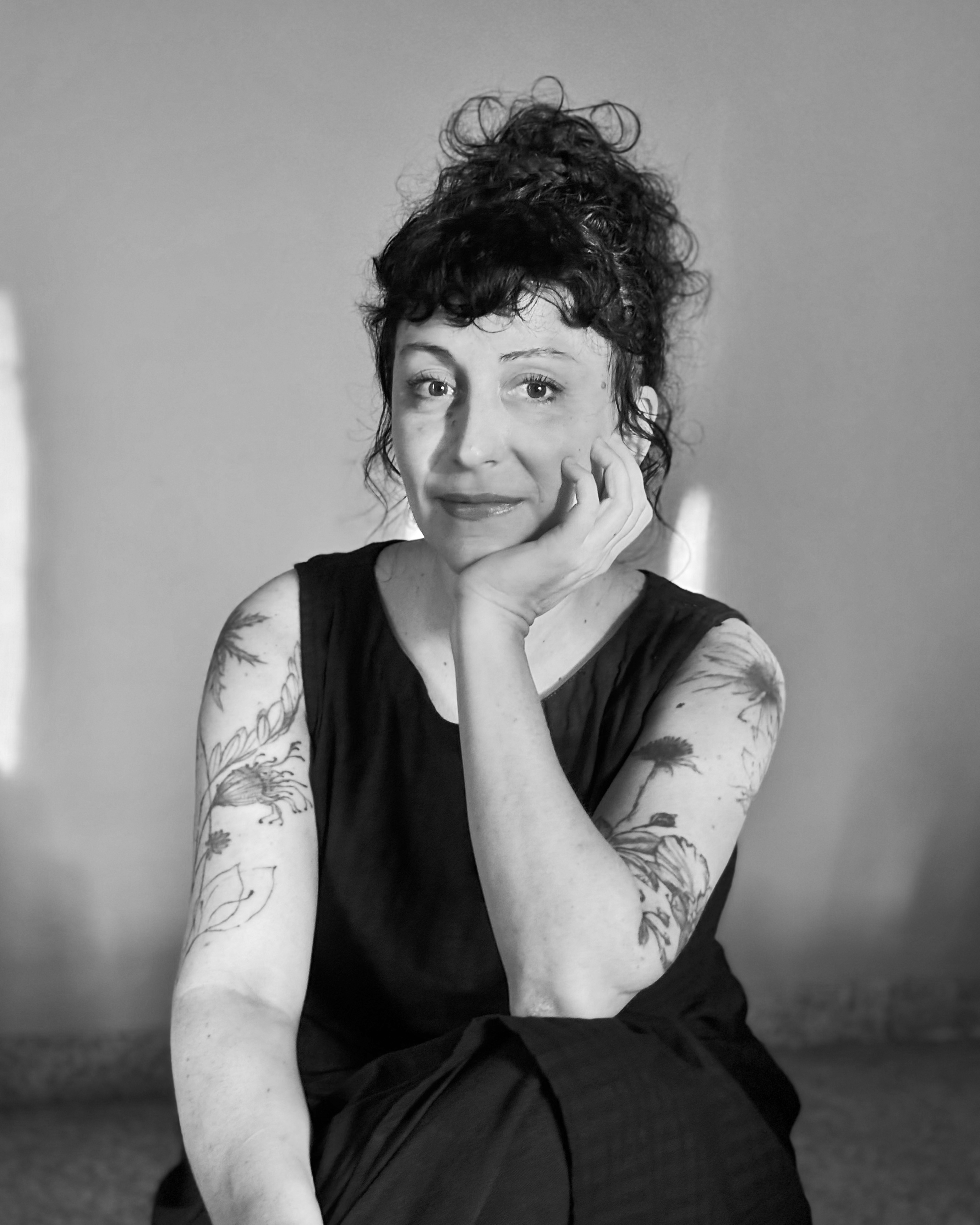
Rebecca Simons is an artist, educator, producer, and cultural strategist whose work focuses on the conditions that enable artists and cultural practitioners to build sustainable, meaningful careers. Drawing on extensive experience across education, publishing, project development, and professional mentoring, she has spent years helping practitioners navigate the often invisible structures that shape artistic life.
As the leader of The Artist's Practice Lab, Simons approaches professional development not as a separate skill set, but as an integral part of artistic practice itself. In this conversation, we discuss sustainability, authorship, visibility, and why learning how to support and position one's work has become as important as making it.
Your career has moved across many different roles: artist, educator, producer, editor, mentor, and cultural strategist. How has occupying these different positions shaped the way you understand what an artistic practice actually is?
I have had the luxury of working across many different roles within the fields of art and photography over the past two decades. Each role has given me a different perspective on both the industry and artistic practice itself.
Starting out as an artist, I was mostly concerned with what I wanted to make. Later, through curatorial work and producing, I became more interested in how work is received and experienced by others. As an editor, I learned the importance of sharpening ideas, identifying the core of a project, and communicating it clearly. Through coordinating educational and artistic programmes, I came to understand the value of networks, collaborations, and the structures that support creative work. As an educator, I continue to encounter new generations of artists, each bringing different concerns, ambitions, and ways of engaging with practice. All in all, it keeps on shaping my view of the practice.
Looking at artistic practice from these different positions has made me realise that making the work is only one part of the equation. As artists, we are often deeply engaged with what we create and what we want it to convey. Yet from the other side of the table, I often see a lack of clarity around where artists want their work to exist and with whom they want it to communicate.I’m not saying that no one considers these things, but I am often surprised by how little attention they receive. Simply putting work into the world and hoping it will be picked up is an old romantic dream that was never a reality for many. I believe that if we define more clearly what we want our work to do, where we want it to exist, and who we want it to engage with, we can channel our focus much more effectively. To me, an artistic practice is not only about making the work itself, but also about understanding the ecosystem around it and our place within it.
Many artists spend years developing their work, but very little time learning how to sustain a practice over the long term. Why do you think this gap still exists, and why is it so important to address it?
I think a lot of it has to do with breaking the myth that true art exists in some sacred space. Being entrepreneurial or more consciously laying out a path has long been seen as the polar opposite of creative practice. I like to think that there is so much more we can use our creativity for beyond the production of the work itself. We can apply it to finding new ways of communicating our work, building collaborations, identifying funding opportunities, and creating contexts in which the work can exist.
Being entrepreneurial or business-minded often seems like a dirty word, as if becoming too goal-driven automatically compromises the quality of the work. I don't believe that has to be the case. The challenge is not to become more business-minded for the sake of it but to understand what kind of practice you want and then find structures that support it. There is a big difference between making work to fit a strategy and building a strategy around the way you already work. The latter can actually create more freedom.
In your experience, what are the less visible skills that are crucial for sustaining a career over time?
Networking skills are key. This is something many people struggle with because they see it as a forced activity. To me, networking is less about collecting contacts and more about showing up in places that genuinely interest you and meeting people who share similar interests. Many of the most valuable opportunities and collaborations grow out of those relationships over time.
Communication is another important skill. How do we share our work, not only visually but also verbally, in a way that is compelling while remaining authentic to who we are? We often spend years developing the work itself, but much less time learning how to talk about it or help others understand why it matters.
Learning how to collaborate is a valuable skill in itself. There is a tendency in photography and art to believe we have to figure everything out alone, while in reality most sustainable practices are built with the support of others.
Then there are the softer skills, such as self-awareness and confidence. Learning to understand what your strengths are and also building resilience and see ‘rejections’ as part of the journey. We win some, we lose some, but we don't let it define us.
The Artist's Practice Lab focuses on the structures that support a creative career. What are some of the most common challenges you see artists facing today, regardless of where they are in their career?
One of the challenges is understanding which opportunities are actually worth investing in. We work within a field that largely feeds on the artist. We are often told that opportunities are being offered to us, but many opportunities also require an investment from the artist, whether in time, money, labour, or visibility. Open calls, festivals, self-publishing, portfolio reviews, exhibitions, even this course, they can all be valuable, but they can also be costly. Learning how to evaluate opportunities critically and understanding the value of our work, our time, and our energy is becoming increasingly important.
Another challenge is financial sustainability. It is not easy to earn a living solely from artistic work. Most artists combine different income streams throughout their careers: grants, commissions, freelance work, part-time jobs, or other activities. Finding a balance between those different activities while still protecting time and energy for your own work can be difficult.
Throughout your career, you've helped create frameworks that support artists rather than simply evaluate them. How has that experience influenced the structure of The Artist's Practice Lab?
I used to wish that someone would hand me an A, B, C guide on how to make it. Later I realised why nobody could, because it doesn't exist, and there is not really such a thing as ‘making it’. There are simply too many factors that shape our practices, ambitions, circumstances, and definitions of success. There is no single path and no one-size-fits-all model. It’s more about developing a sustainable path that fits you.
That realisation has strongly influenced the structure of The Artist's Practice Lab. Rather than offering a blueprint, I wanted to create a framework that helps people define their own path. That is why I developed the Artist's Practice File, which forms the backbone of the course. Throughout the programme participants build a working file that helps them define their position, map their network, identify opportunities, reflect on income sources, and think about the structures and support systems around their practice.
I believe we learn a great deal from examples. Hearing how other people have navigated challenges and shaped their careers allows us to reflect on our own situation and take away the parts that resonate. That is why the programme includes guest experts.
Peer learning is also an important part of the course. We all bring different experiences and perspectives. If we can create an environment where people feel comfortable sharing the group itself becomes a valuable support system.
I have been working in the field for 20 years, but I certainly don't have all the answers. What I do bring is experience from different sides of the table. I see my role as a coach helping participants find their own way forward, identify what matters to them and ask better questions.
The Artist's Practice Lab is not about 'success' in a conventional sense. Has your understanding of sustainability changed over the years and what does success mean to you when thinking about a long-term artistic practice?
The idea of success has intrigued me for a long time. I think we all have an immediate image of what success looks like: maybe someone earning a full-time living from their art, exhibiting internationally, or gaining recognition. But if we really take the time to investigate our own idea of success, we might arrive at very different conclusions.
I was certainly drawn to recognition, titles, and professional achievements. Yet at the point where I was earning the most money and ticking many of the boxes I thought I wanted, I crashed hard. It forced me to reconsider what actually gave me meaning and energy. In that process, my idea of success changed.
If we really consider what is important to us, our idea of success may not be as far away as we think. For me, it is about having enough space for my own artistic work while maintaining a balance with family life. It is also about being clear on why I make work and what I want it to contribute. Over time, making socially engaged work became increasingly important to me. Of course, finding financial ways to support a practice is important too, but money was no longer the goal in itself.
More recently, I have come to realise that sustaining a practice is not something we do alone. There is enormous value in finding people who share your values, who challenge and support you, and with whom you can amplify each other's voices.
All of this has made success feel less like a destination and more like something that is within reach, something that brings meaning and allows us to keep growing.
.jpg)
.jpg)
.avif)



.avif)

%2520Unseen-campaign-2024-square-forweb.jpeg)

.avif)


.avif)




.avif)




.jpeg)




.jpg)
.jpg)









%252C%25202015.jpeg)