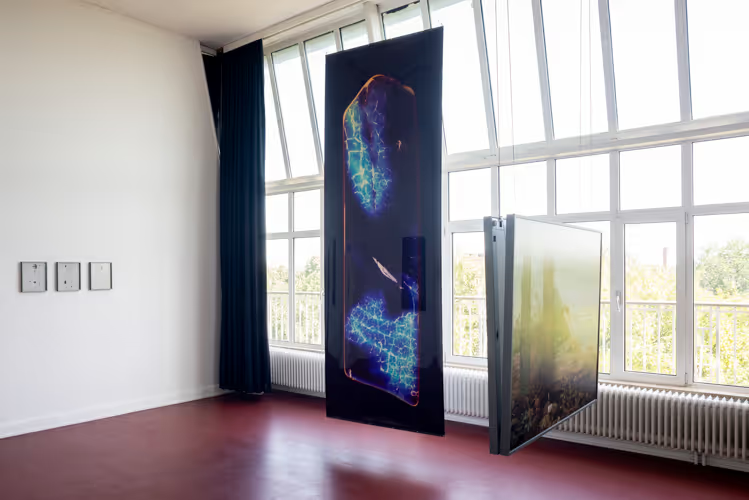
Much feminist attention has been paid to the fact that one is not born a woman, but rather, becomes one. The same holds true for men. Rohr is part of an emerging wave of artists who turn their eye to the performance of masculinity, adding nuance and complexity to the heated cultural debate around toxic masculinity.
‘My work used to exclusively focus on women and girls’, Rohr explains. ‘There was so much happening around femininity online. In my project Money Making Child for example, I showed how girl influencers are being pushed to adhere to ideals of adult femininity. Now we are more aware of boys and men who are equally tough on themselves, pushing themselves to ever more extreme aesthetic norms. The algorithm reproduces what most people resonate with, and that is often a very rigid understanding of gender that impacts men as well as women’.
‘Last summer I began to think about the manosphere. I was reading the German feminist author Tara-Louise Wittwer, who writes about the red-pill ideology that undergirds the manosphere. Once you have ‘consumed’ the red pill, you have awakened to the truth that feminism is unnatural.’
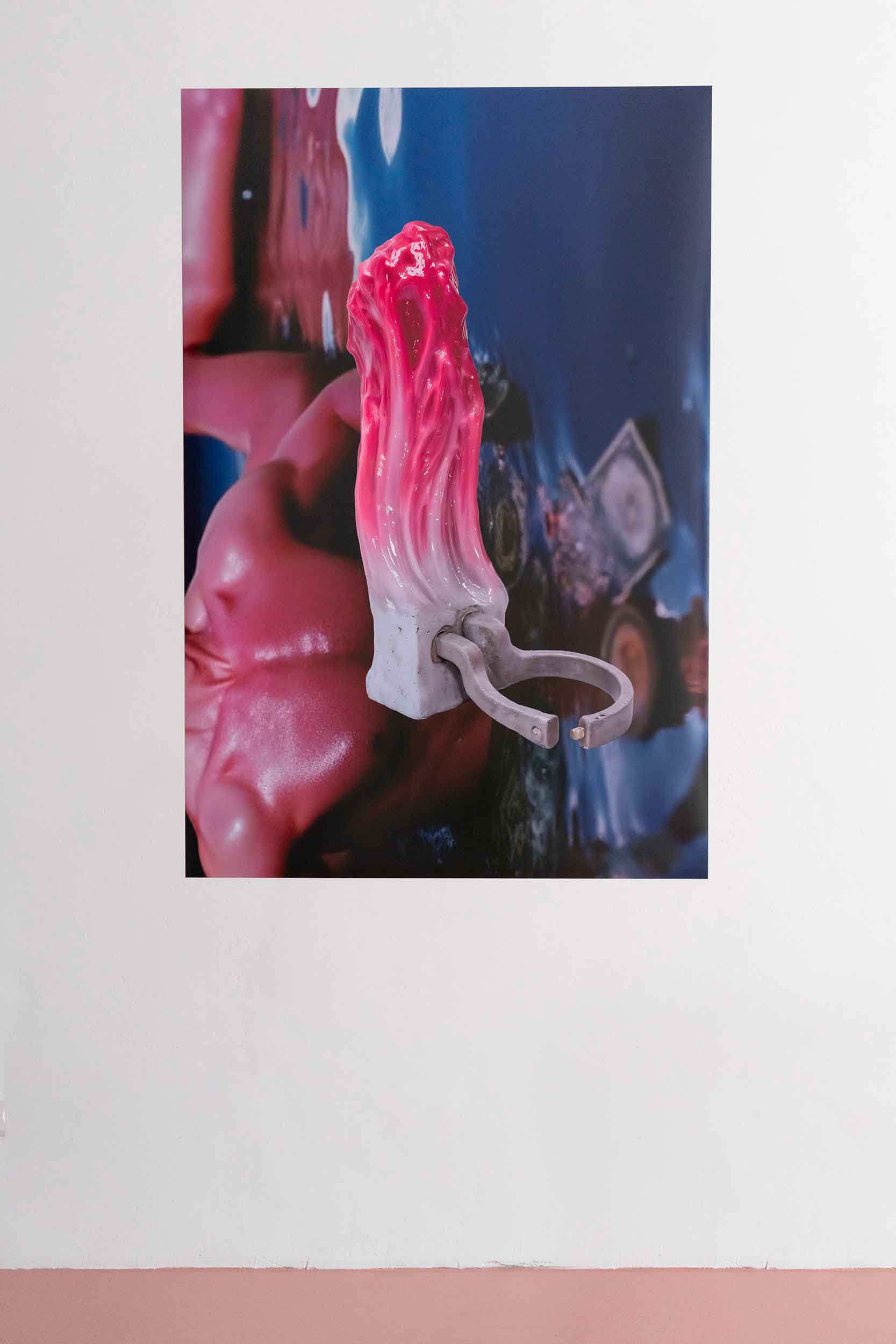
What fascinates Rohr about the manosphere is that it involves different generations. While adult influencers promote toxic masculinity, their audience consists of the Alpha generation: boys as young as 12. They look at violent trends like penis extensions and looksmaxxing, which means breaking jaws in order for them to look more like adult men, as a way of accumulating power. ‘It is very difficult to look at all of it, Rohr says.This has been a very hard subject to work on, I am completely immersed in it.’ But it clearly fascinates her, she is keen on seeing what’s to come.
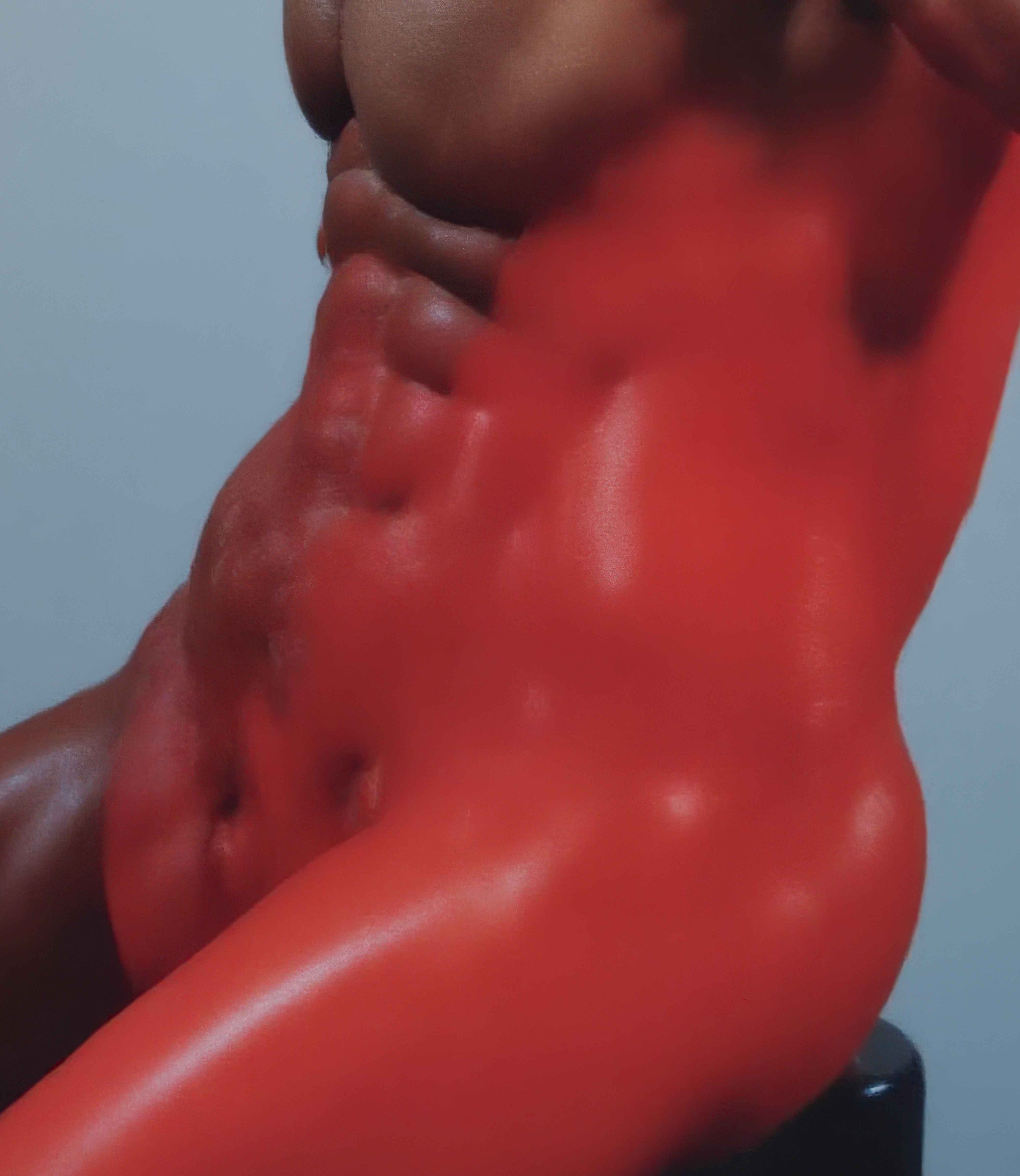
The AI-generated imagery in Red Pill - The manosphere exclusively feature men. In the manosphere women are remarkably absent, men seek the validation of other men, they rate and confirm one another’s hotness, even though the community is ostensibly deeply heterosexual.
‘I first started to use AI when making Money Making Child. AI and social media work with a similar system of repetition and reenforcement. They also have a similar synthetic, artificially ‘perfect’ look. I collect a dataset of images relating to the topic. I mix screenshots from these trends, and combine them with a different aesthetic. Then I write the prompt. You get a lot of options, there is a part that you can control in AI, but also a part that cannot be controlled. That is the exciting and also the dangerous aspect of working with AI. With photography I am very in control. With AI it is unclear where we end up.’

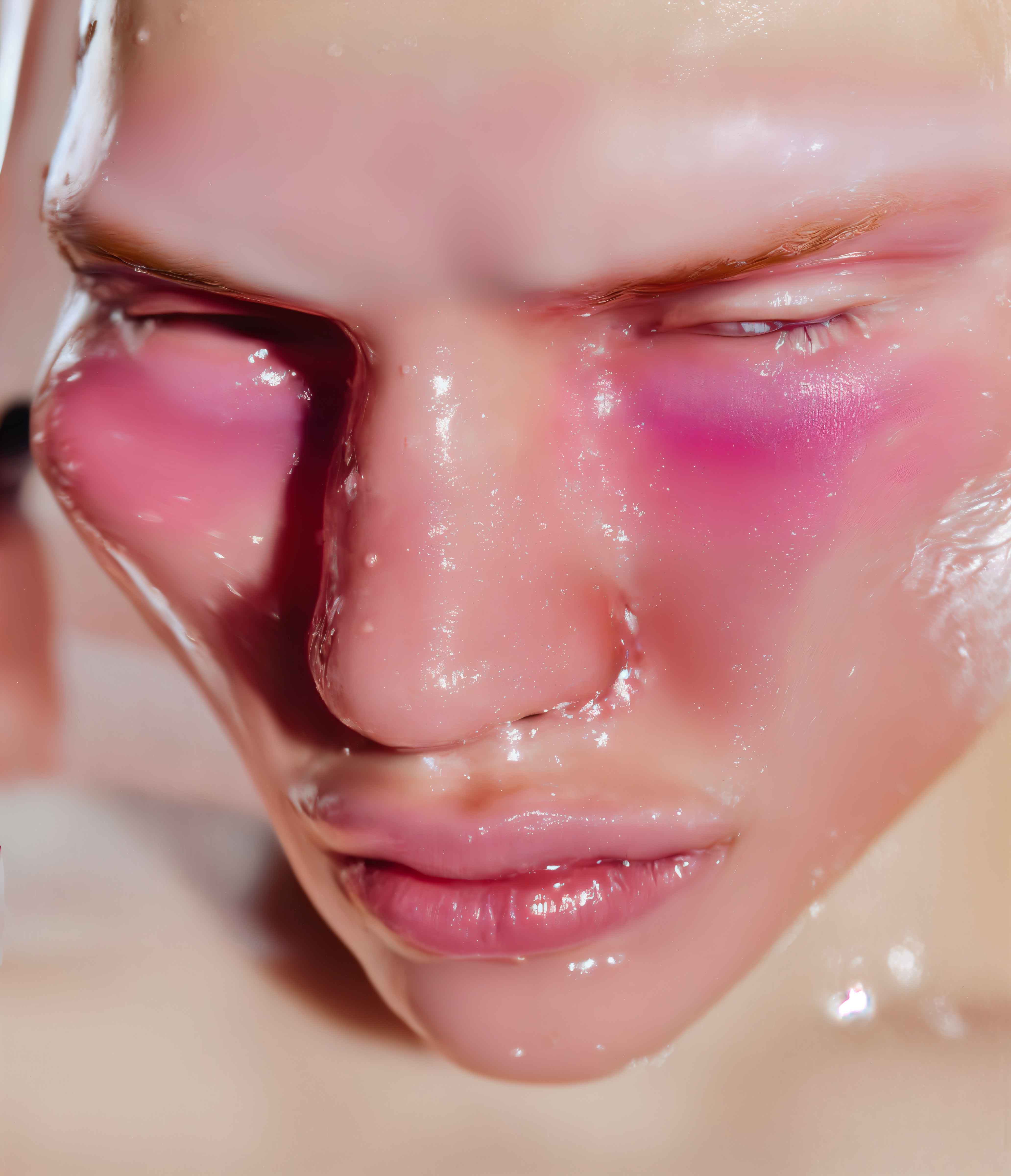
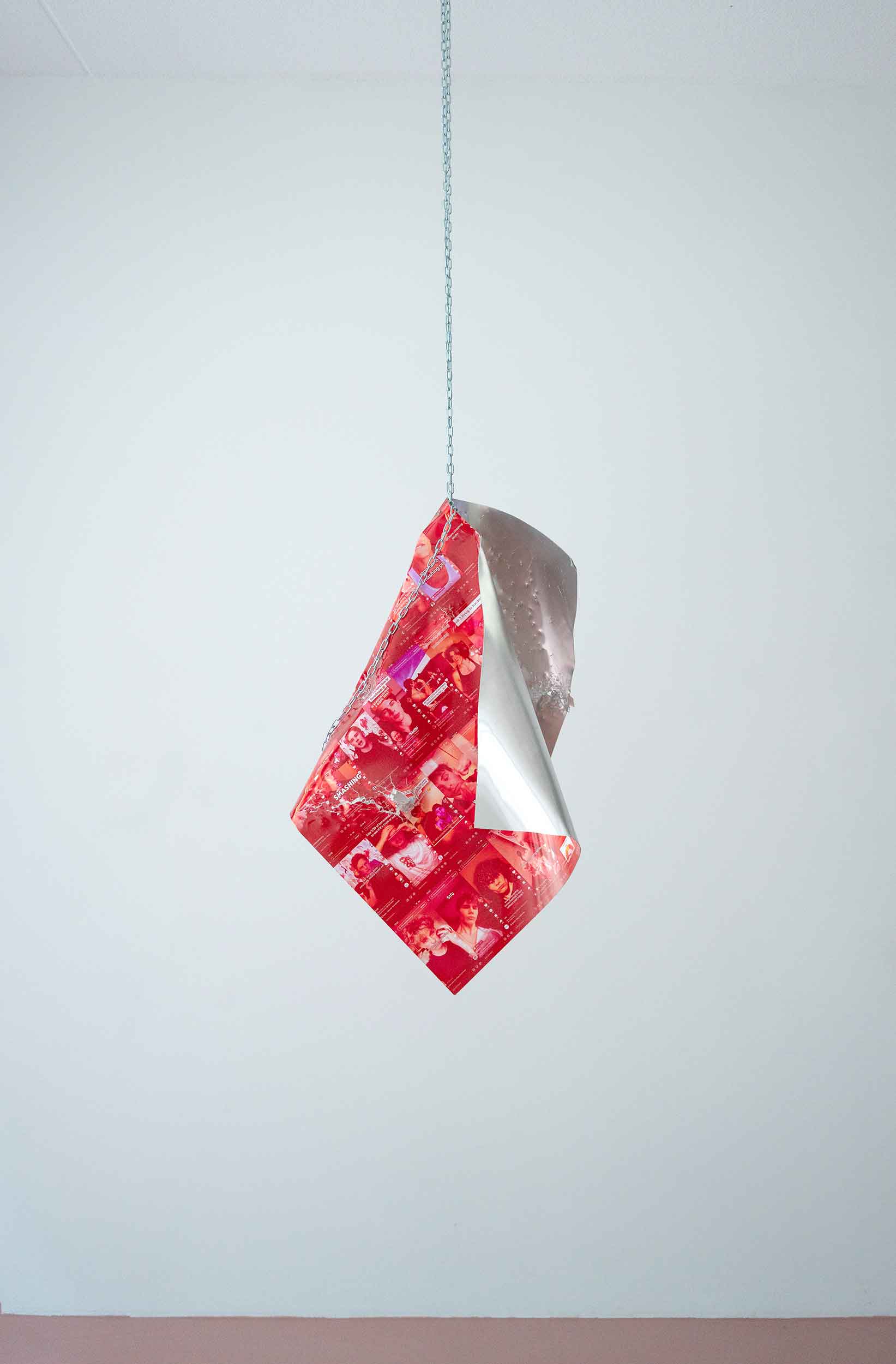
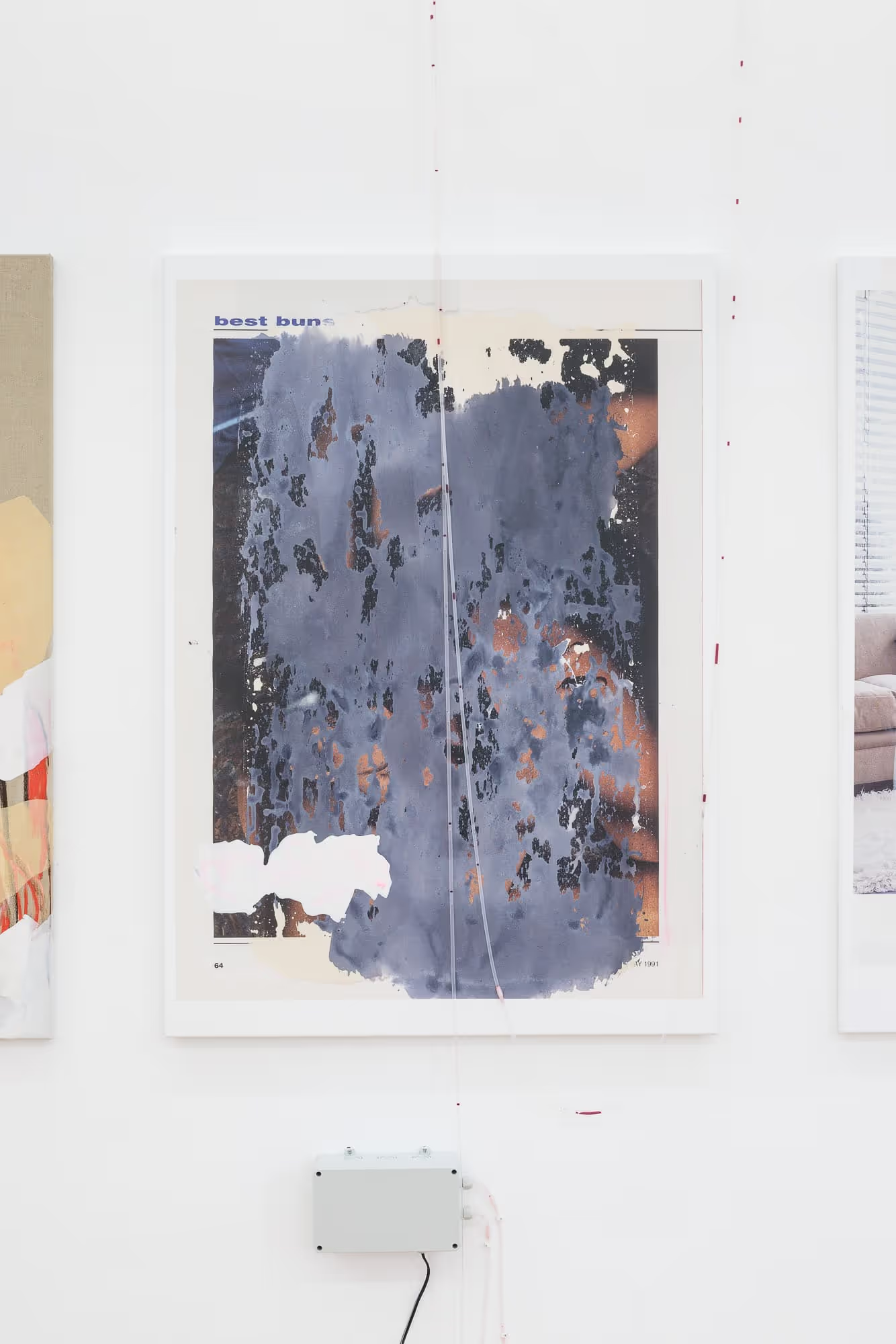
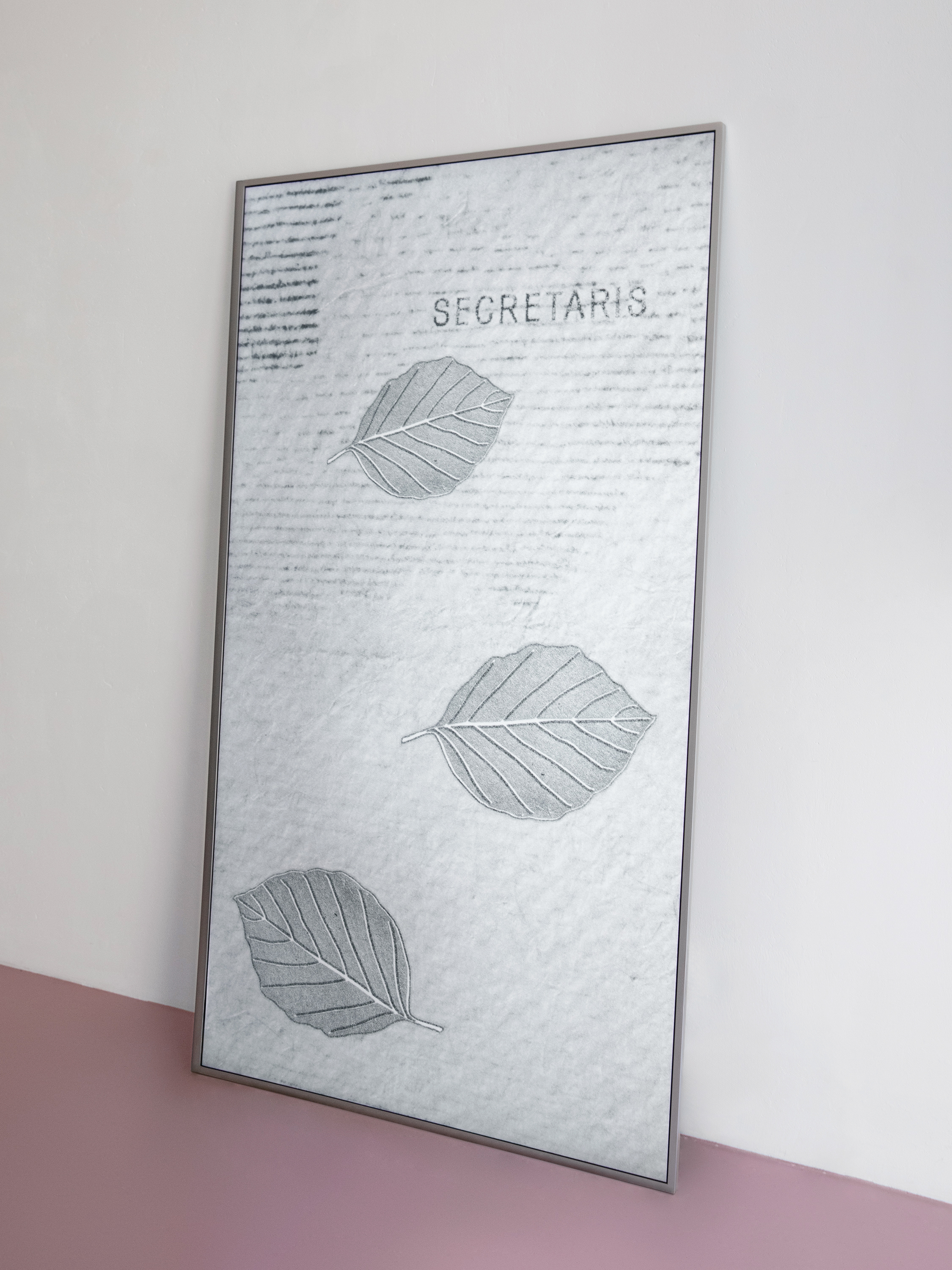
Rohr shows me an image of a man with enhanced, purple, smashed cheeks. By printing a collage of images collected from TikTok of the “bonesmashing”-trend on aluminum, hammering the aluminum from the back, and by adding screws, the man literally is turned into a ‘body under construction’. Another image looks like a Batman play figure, dripping in synthetic red, a nod to the Red Pill. Rohr is also creating a big print on aluminum, featuring many screenshots of the very violent trend of looksmaxxing, thus reflecting the fantasies and optimizing nature of manosphere ideals.
Rohr wants to continue working with photography and AI, and she hasn’t completely made up her mind yet, in terms of how strict she want to be with AI. ‘I want to be progressive, it’s here, let’s use it. But at the same time, I worry about my photos, that I have worked on for years, being used as a dataset to reproduce my style. What I find most scary about AI is images that seem real. But using AI because it has strange characteristics can be fun. I often get the question why I use AI, instead of taking photos. But for me that question doesn’t make any sense. It’s like asking “Why do I drink coffee instead of tea?" When people were painting and photography emerged, people also said that photography was easy. AI is not that easy to use. It’s very difficult to take a good picture, similarly, it’s not easy to generate a good image using AI. It’s not the easier escape.’
Rohr also makes artwork with deepfakes, a technology renowned for its misogynistic usage. The video “What would you like me to say?” was inspired by the recent public debate in Germany following the allegations of deepfake abuse and digital violence against TV presenter Christian Ullmen by his own partner, TV presenter Collien Fernandes. Rohr gave her image, video and voice to AI, with the prompt “What would a man from the manosphere want "me" to say?” The face carries her emotion, hesitation, and resistance, while her speech no longer belongs to herself. By using AI one feeds AI, but Rohrs work suggests a power grab, in using AI to make something very different, to turn the medium on its head. Rohr’s work uses AI in order to expose it.
Rohr continues to work on femininity, and is making a plexiglass sculpture about the clean girl trend, an equivalent for women, explains Rohr. That is all about ‘being quiet, perfect and pure. It’s very, very conservative and has racist and fascist undertones’. ‘It would be interesting to exhibit them alongside one another’.
.jpg)
.jpg)
.avif)




.avif)

%2520Unseen-campaign-2024-square-forweb.jpeg)

.avif)


.avif)






.avif)




.jpeg)




.jpg)
.jpg)









%252C%25202015.jpeg)