The
Artist
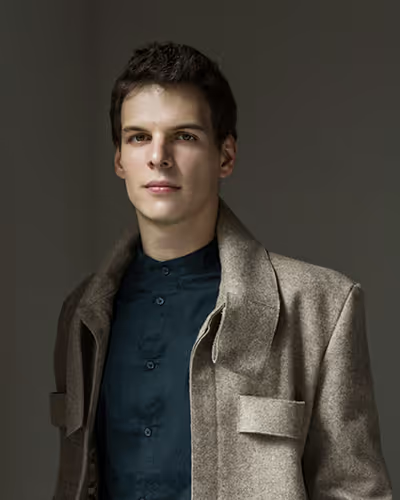
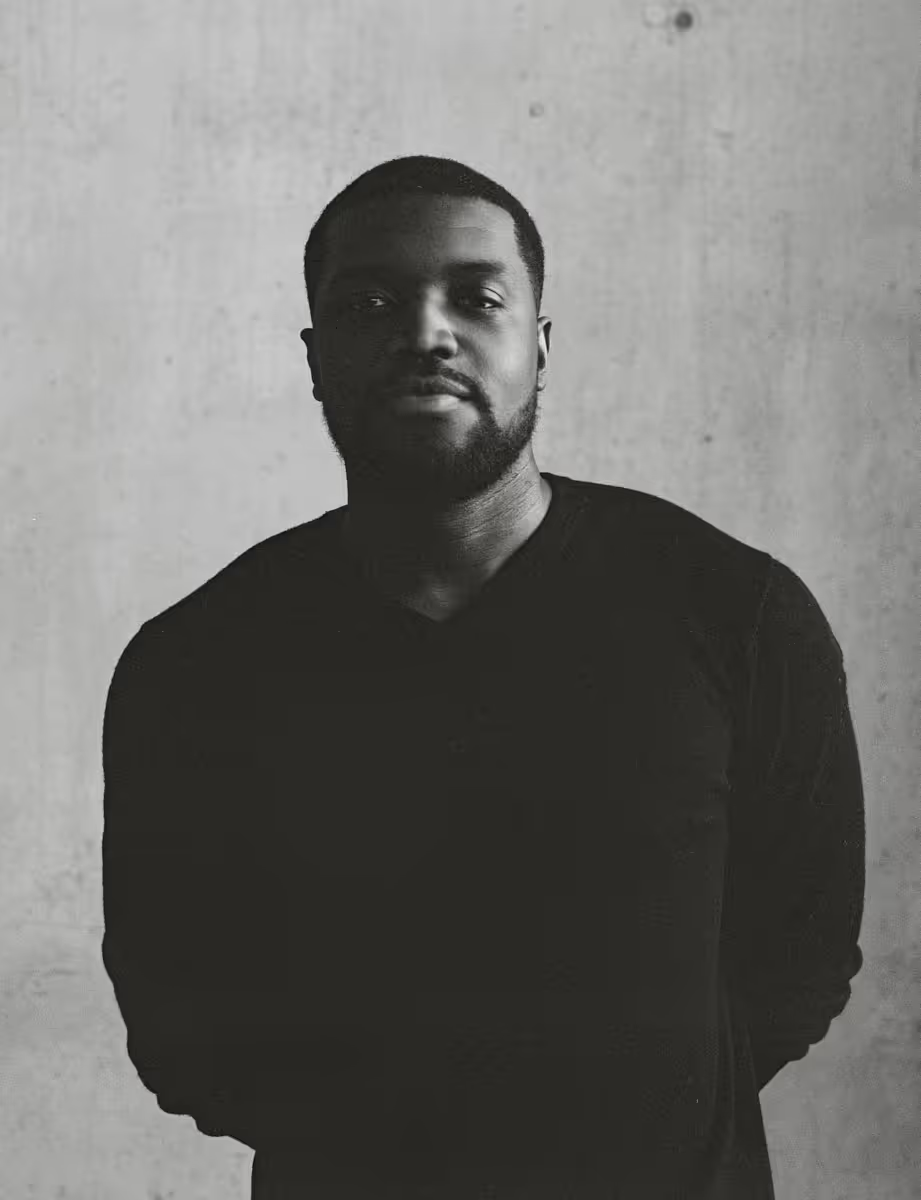
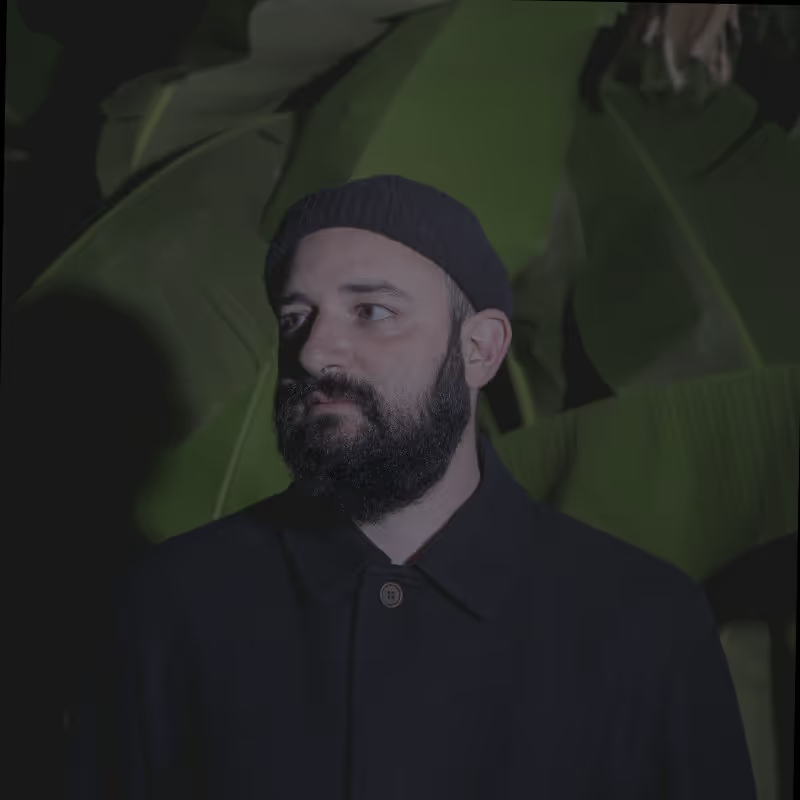
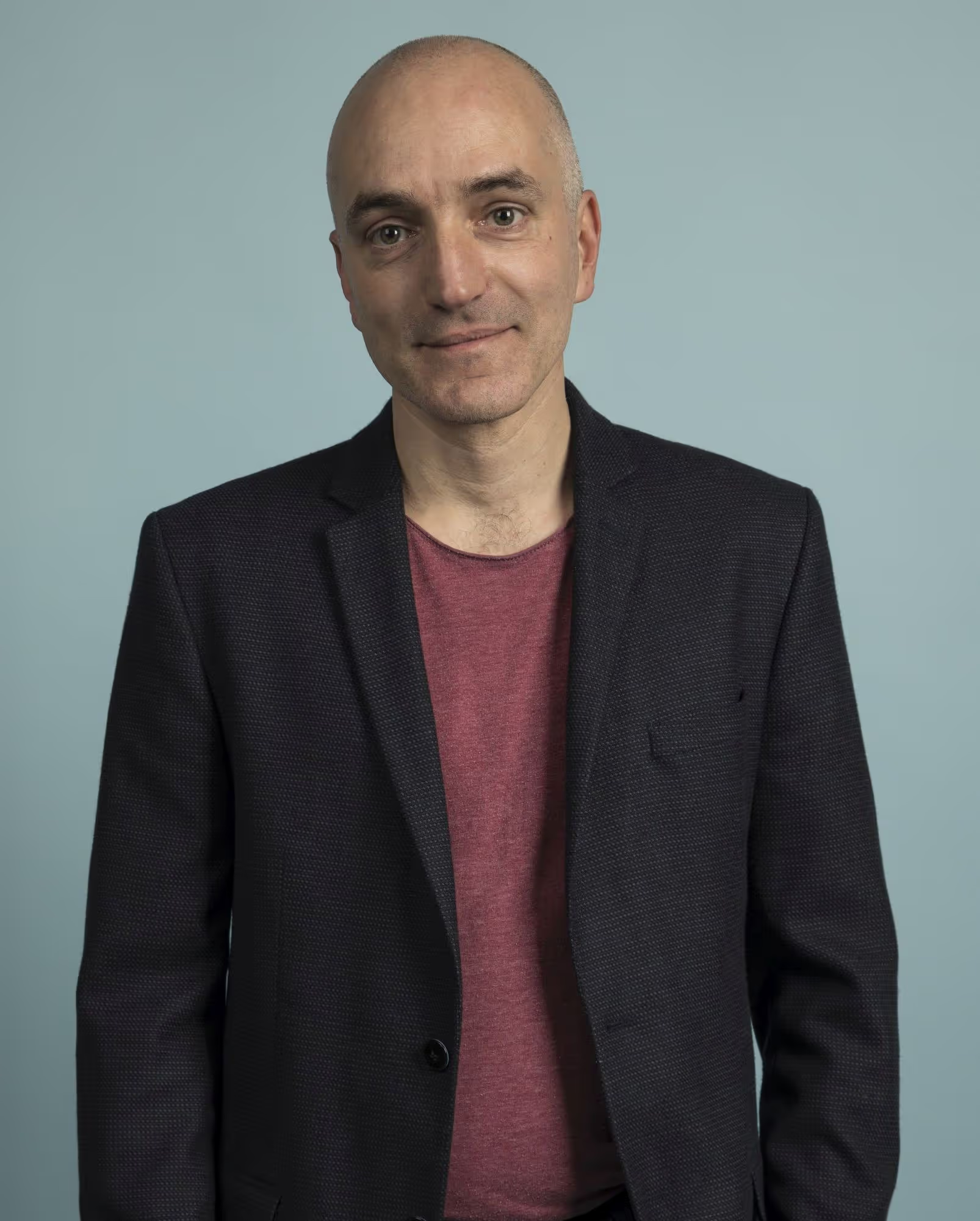
Dmytro Kupriyan
Lives and Works in
Kyiv
Worked as a photojournalist at news agencies and later started to work on the topic of tortures doing a photo project about violence in Ukrainian police (project "TORTURED") and aftermath of it. Then I shift to topic of violence in wide meaning of it making a projects about war in Ukraine (projects "Fragments of War", "Banality of Aggression" and "WHEN THE WAR IS OVER").
At 2022 I finished long-term project about highest point in Ukraine mountain Hoverla, also made a project HOME about human habitat and project HOMO about human self-representation. After the full-scale invasion of Russia in Ukraine start to serve in Ukrainian Army and made a projects about it.
Projects
2025
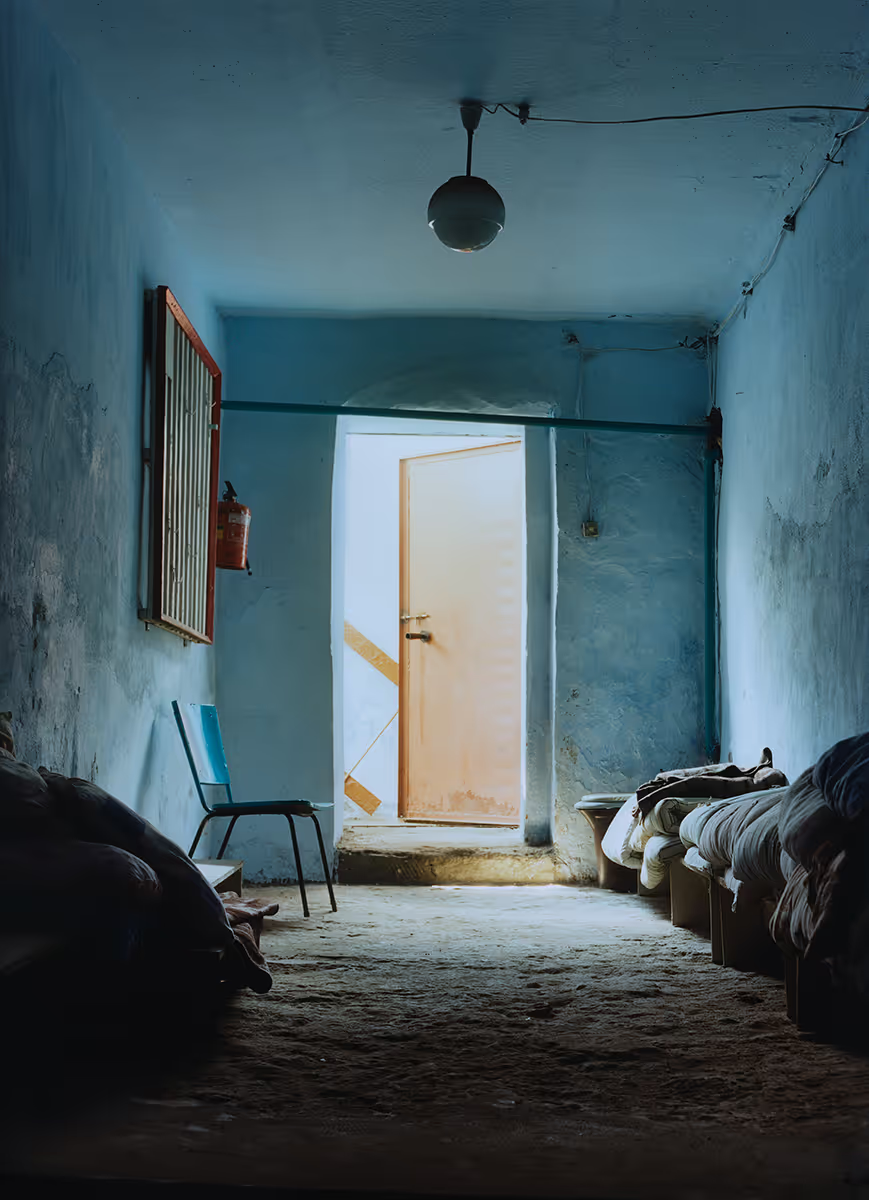
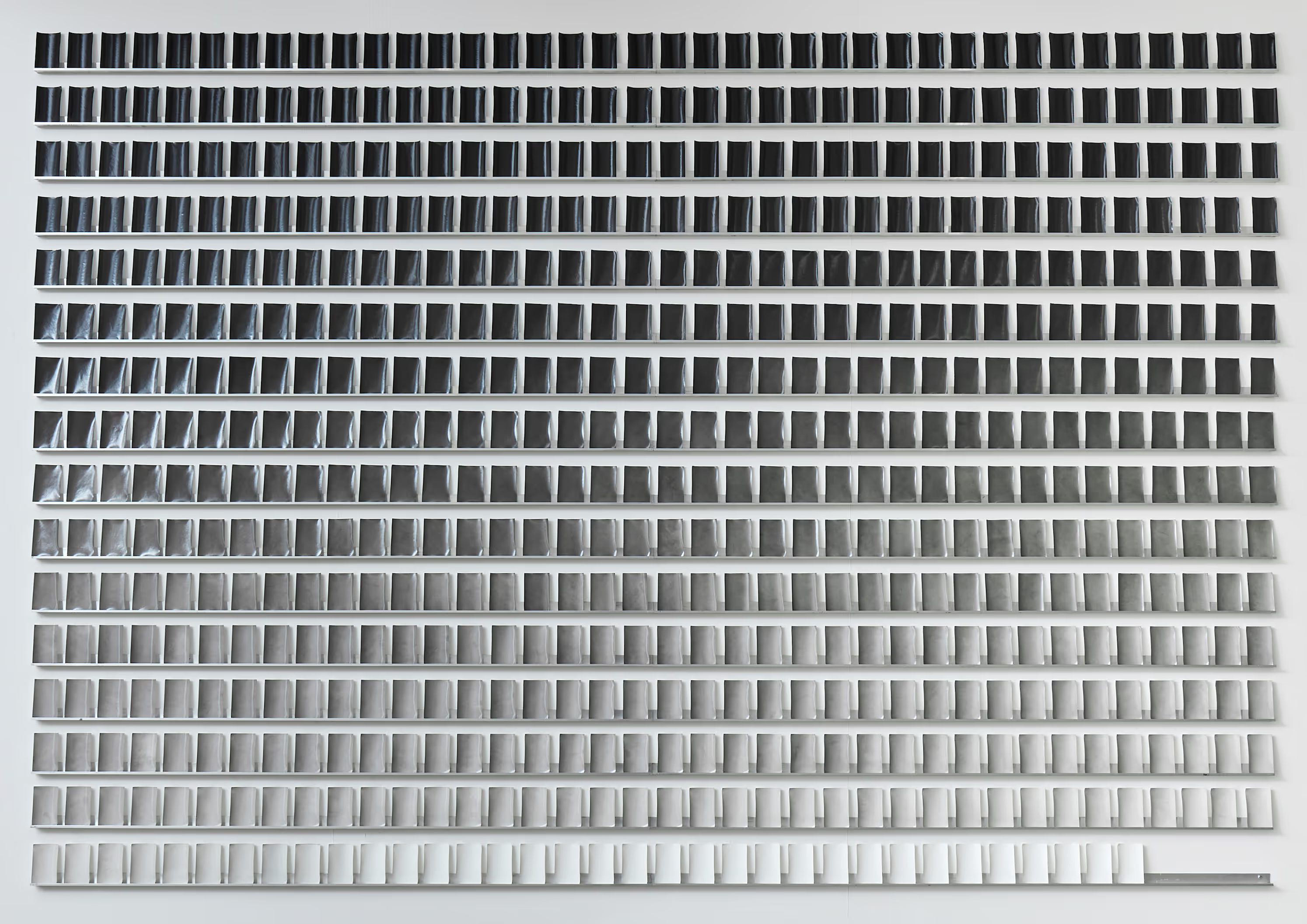
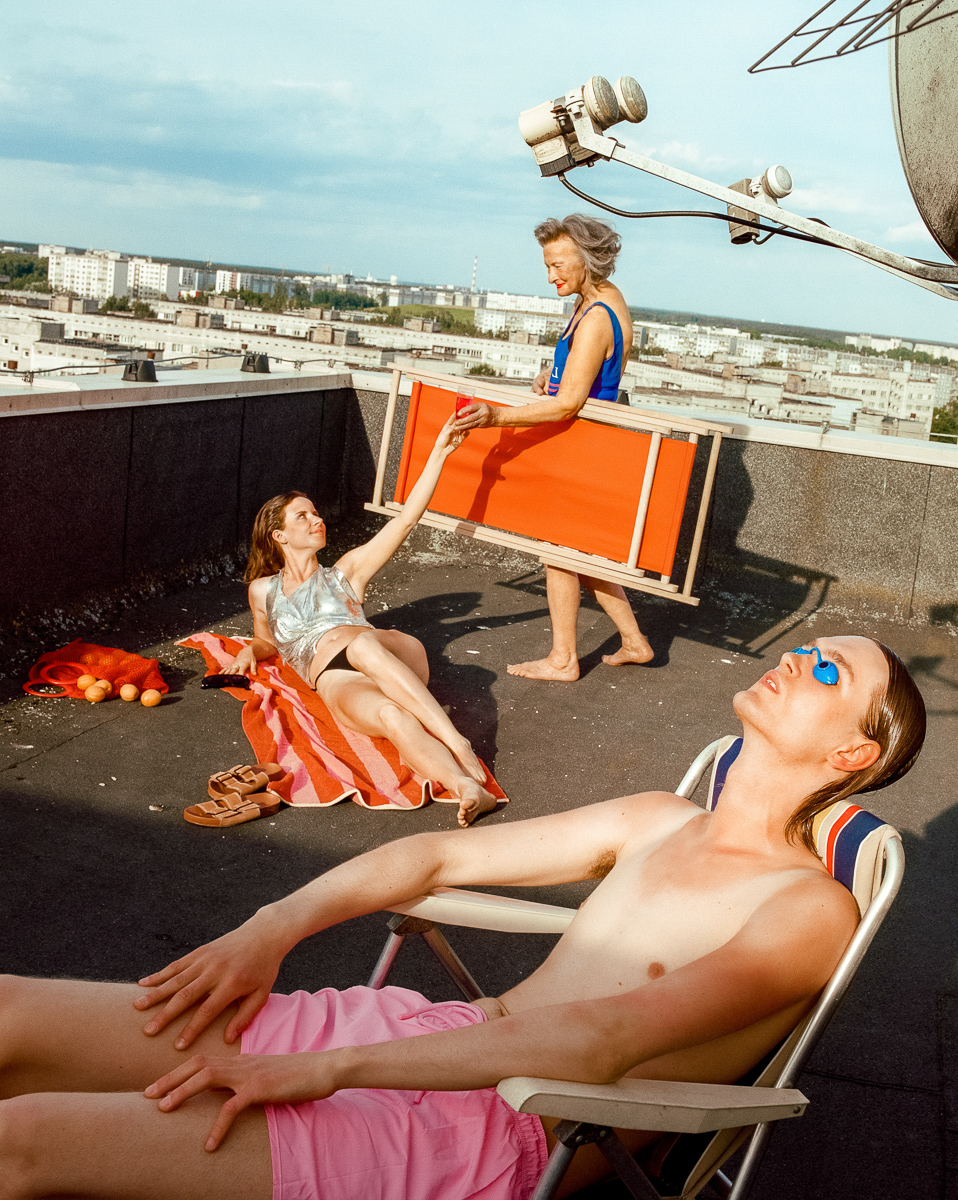
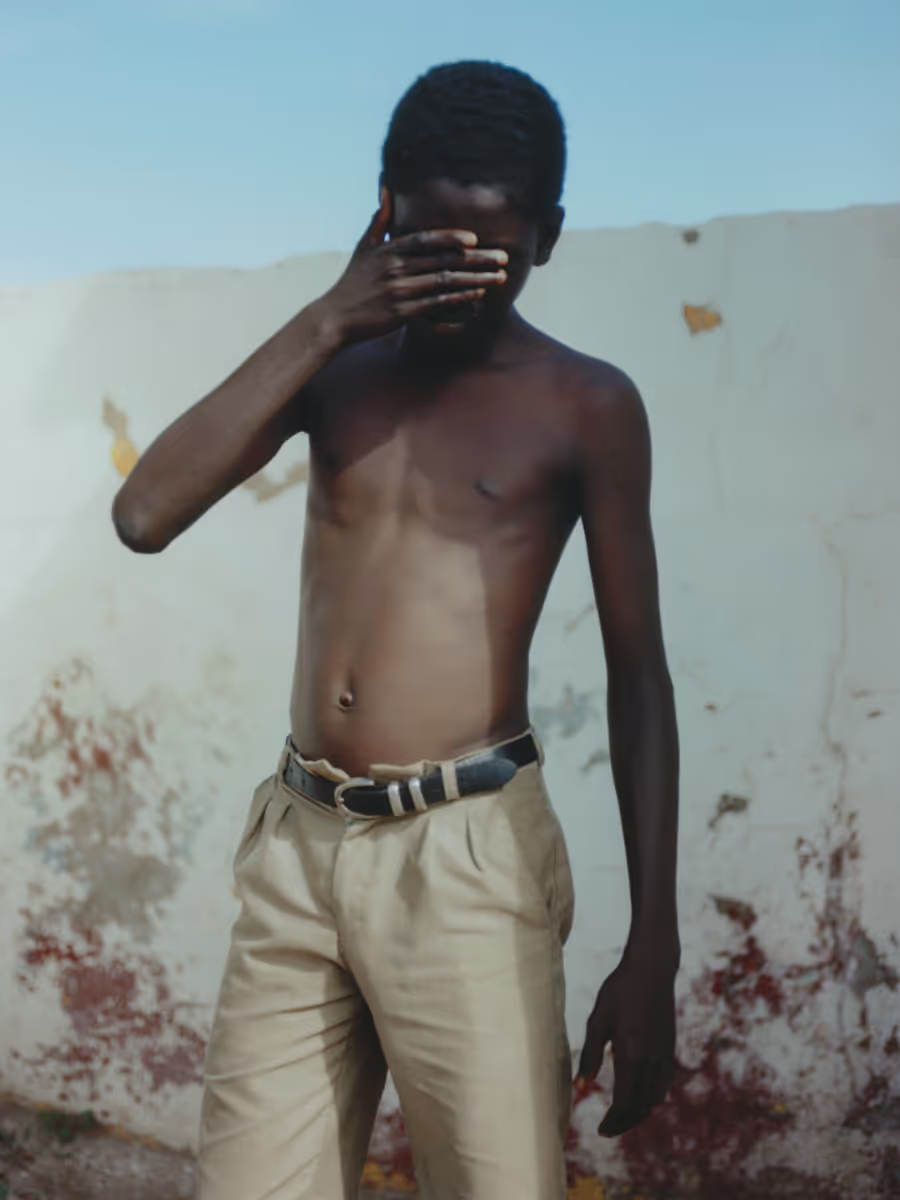
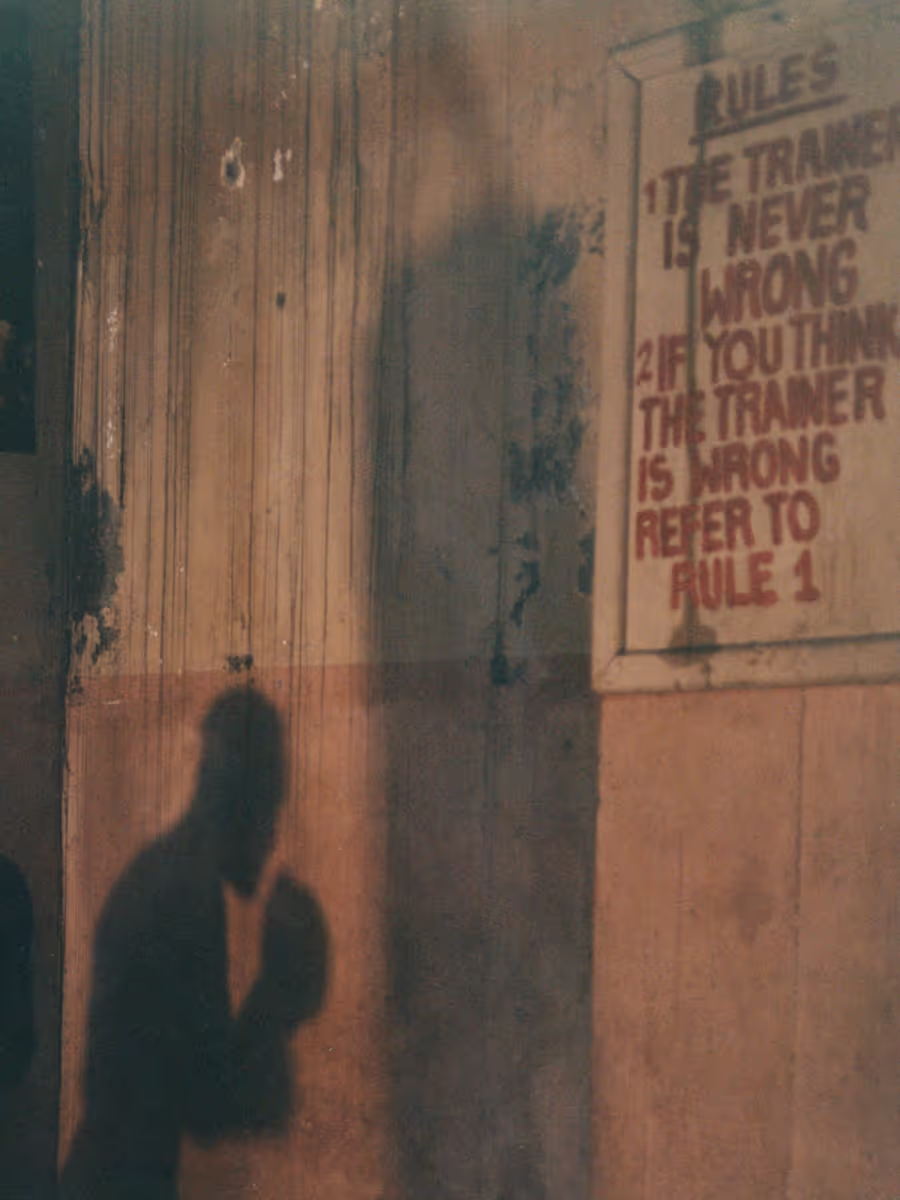
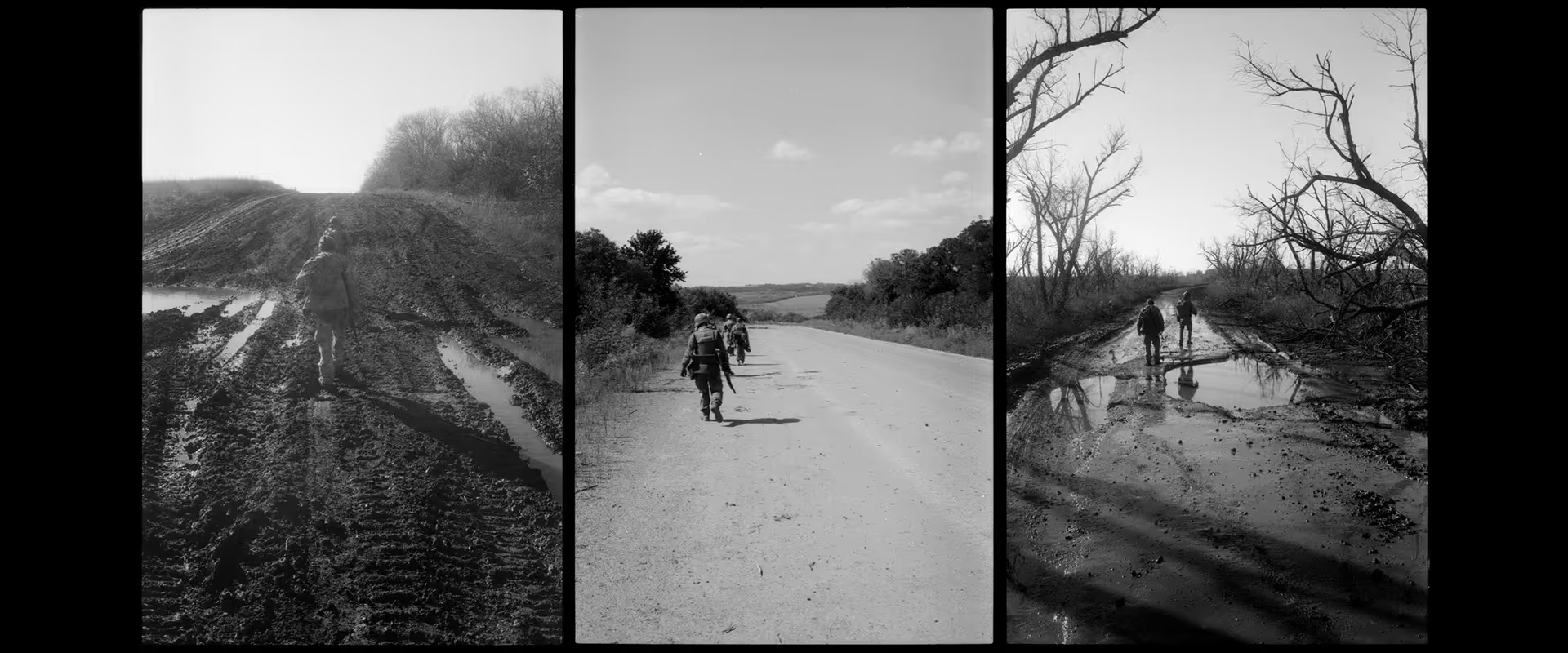
The Art of war or Rules of caring for a rifle
The name of the project consists of two parts. The first - "The Art of war" - is about the very fact of artistic expression during war and the conditions in a military environment in which art becomes inappropriate, when priorities change dramatically, and familiar social environments and connections are destroyed. But at the same time, the process of creating art gives the prospect of returning to a familiar existence, makes it possible to dream.
The second part in the title - "Rules for caring for a rifle" - is about the visual content of these photos, specific everyday routine actions that soldiers ought to do in order to achieve the goal for all of us in general. For that purpose they need to learn and repeat the same actions and movements every day, bringing them to sophistication, mastery and perfection - whether it's cooking, or training on the range, or simply cleaning weapons. That is why, in order to show these monotonous, and usually very boring processes, these photos consist of three photos, which either plot-wise or visually flow into each other and create triptychs of stories from the words of single photos.
Dmytro Kupriyan
was nominated by
Odesa Photo Days Festival
in
Show all projects
Each year every member of the FUTURES European Photography Platform nominates a set of artists and projects to become part of the FUTURES network.
Related artists
More artists that you might
like to explore
All artistslike to explore

My creative approach is mostly based on social context and theoretical research, experimenting with the moving image medium itself and reactivating the format and model of the moving image. My research direction is to search for the "ecological" existence of the moving image, and to explore a new relationship between "human beings" and "the world" in the technological increase of entropy in the Anthropocene.


Maria Beatriz de Vilhena (b. 1991) is a Lisbon based photographer, with a professional background in architecture. She studied photography at CFP Bauer Milan and holds a master's degree in architecture from the University of Lisbon.
Her photographic work explores the pluralism of human nature through belief and collective identity, as well as issues related to memory and noetic. In recent projects, she has been working on the border between fiction and reality, through myths and tales connected to personal and historical events.
Recent shows include One dark night, Lazarus disappeared (Coruchéus Gallery, Lisbon, 2025), Five Relics, Five Photographers (Museum of São Roque, Lisbon, 2025), and Real Life is Not Black and White (Paris Photo, 2024).
Her photographic work explores the pluralism of human nature through belief and collective identity, as well as issues related to memory and noetic. In recent projects, she has been working on the border between fiction and reality, through myths and tales connected to personal and historical events.
Recent shows include One dark night, Lazarus disappeared (Coruchéus Gallery, Lisbon, 2025), Five Relics, Five Photographers (Museum of São Roque, Lisbon, 2025), and Real Life is Not Black and White (Paris Photo, 2024).


Glorija Lizde (b. 1991, Split) holds an MA in Photography (Academy of Dramatic Art in Zagreb) and a BA in Film and Video (Arts Academy Split). Her practice focuses on recreation and reinterpretation of the archives and memory interweaving documentary and staged photography, text and objects. She has had several solo exhibitions and participated in numerous group shows in Croatia and internationally, including the O21 OSTRALE Biennale, She Who Starts the Song (17th Gjon Mili International Exhibition of Photography and Moving Image), Familiar Fantoms (Residency Unlimited, New York), Of This World – Envisioning Alternative Cartographies (Robert Capa Contemporary Photography Center), Being/Seeing (QUAD Gallery), Athens Photo Festival (Benaki Museum), In-between (The Bridge and Tunnel Gallery, New York), Floodlit Room – Women’s Photographic Practices in Croatia, among others. Her works are included in the collections of the Museum of Arts and Crafts in Zagreb and the Kiyosato Museum of Photographic Arts in Japan. Lizde was selected for the international emerging artists program Parallel – European Photo Based Platform in 2018 and 2021. She received the Dr. Éva Kahán Foundation Scholarship and Residency in 2022 and was awarded the Radoslav Putar Award the same year, recognizing her as the best young visual artist in Croatia.


Pascual Ross (b.1977) is a Spanish photographer, who lives and works in Andalusia. His photographic practice is based on the people and the stories that each of us carry inside, this being his central axis of work. It reflects on the individual, his natural environment and the customs that condition him in one way or another. The minimal stories are the most important in the story line of your work.

Masha Weisberg (b. 1997, Ukraine) is a visual artist currently based in Vancouver, Canada. Working primarily with photography—ranging from historical and alternative processes to experimental and mixed-media approaches—Weisberg explores themes of generational trauma, cycles of human history, motherhood, and the complex relationship between personal and collective memory. Her practice blends abstract and narrative-driven imagery, engaging with photography as a medium beyond documentation, often intersecting with installation and video art.
Her ongoing projects investigate inherited histories, war trauma, and the fragility of human experience.


Focusing on the role of humans within society and their direct interaction with their environment, Maxime Guedaly has been building a documentary photographic archive for the past ten years.
A self-taught photographer with an engineering background, he constructs his projects from the archives he has created. Selected, organized, and related according to their purpose, these images find their place in public spaces and in venues accessible to all audiences.
The formal association of several regimes of images serves as a starting point for reflection on the physical and political movements of communities engaged in society, whether they come from a cultural background linked to live performance or the associative world.
Through video, the photographer establishes a dialogue between the movement of urban and human respiration, creating a common vocabulary between two entities emerging from their inertia.
Evolving towards the fields of performance and collaborative art, the role of the artist becomes porous, straddling participation and documentation. While the question of the reception of the work remains unchanged, the artistic process is completely reexamined.
Maxime Guedaly was born in Toulouse in 1987. He is trained as an engineer and is a self-taught photographer. He trained in authorial projects at the ENSP in Arles in 2018.


Paula Artés (1996) is an artist committed to unveiling and questioning hidden spaces
of power—and, by extension, control. Through rigorous prior research, she brings
these spaces to light.
Her work has been exhibited at Museu Habitat, curated by Manuel J. Borja-Villel;
Santa Mònica in Barcelona; Lo Pati in Amposta; the Museu Morera; and the Festival
de la Imagen in Colombia. She won the ArtNou Award for Best Exhibition at àngels
barcelona gallery.
Her work is part of the Mapfre Foundation collection and the Contemporary Art
Collection of the Generalitat de Catalunya. She has been selected for PhotoEspaña
Descubrimientos, Sala d’Art Jove, VEGAP, OSIC, and Unseen Amsterdam. She has
also been nominated for the Gabriele Basilico Prize, the C/O Berlin Talent Award, the
MAST Foundation Prize, and the Pla(t)form Prize at FotoMuseum. Additionally, she
has participated in residencies at HISK in Belgium and Baladre at Lo Pati.


Zoé Aubry (1993) develops a practice of critical, feminist, and experimental visual research through photography, within installations that unfold in space. Her work aims to reveal the mechanisms of visibility, and invisibility of dominant media narratives, notably through the use of poor images, inverting the logics of the attention economy.
Holder of a Bachelor’s degree in Photography from ECAL - École cantonale d’art de Lausanne and a Master’s degree in Contemporary Artistic Practices from HEAD - Haute école d’art et de design de Genève, her book #Ingrid (2022), co-published by RVBBOOKS and Gato Negro Ediciones, was shortlisted for the Autor Book Award at the Rencontres d’Arles and won the Most Beautiful Swiss Books award.
Her work has been exhibited in group and solo exhibitions, including « The Lure of the Image » at Fotomuseum Winterthur, «LES RESISTANTES» in Paris, « Concerned » at the International Red Cross and Red Crescent Museum, at the Musée des beaux-arts du Locle or in Arles, and several festivals including Athens Photo Festival, Biennale de l’image tangible Paris, Guernsey Photography Festival or Les Rencontres de la Photographie de Marrakech. She was the laureate of the Photographic Survey of the City of Geneva in 2021, and of the Swiss Federal Design Awards in 2018.
Converging or in parallel, she fights within collective and associative projects and co-founds several initiatives where cultural work and political commitment meet to militate both towards utopias and direct field perspectives.


Thérèse Anna Rafter (b. 1989, Dublin, Ireland) is an artist and researcher working
across photography and installation. Her practice investigates how the living world
is mediated within Western visual culture, with particular attention to institutional
modes of representation and display. Engaging critically with the legacies of natural
history, museum practices, and photographic visual regimes, Rafter’s work explores
the boundaries through which human–animal–land relations are constructed and
maintained.
Characterised by a measured tension between restraint and sensitivity, her work is
articulated through a rigorous analogue approach to material, form, and production.
By foregrounding processes of framing, preservation, and visibility, Rafter
challenges anthropocentric ways of seeing and considers how knowledge of
nonhuman life is produced and encountered.
Rafter holds a BA in Photography and completed an MA in Visual Arts in 2024. She
is currently undertaking a research Master’s at Sint Lucas School of Arts, Antwerp,
Belgium.


Anca Punct, an artist from Bucovina and now residing in Cluj-Napoca,
blends tradition with digital innovation in her art. Her photography, which
began a decade ago, has long focused on the Romania-Ukraine border area,
infusing historical and ethnographic insights. Guided by seasoned mentors
and self-taught experiences, Anca integrates AI technology into her work,
creating innovative and deeply creative visual expressions. Her portfolio
ranges from digital collage to generative imaging and photography, each
piece inviting contemplation and offering fresh perspectives.


Related professionals
Other professionals that might be interesting
All professionals
Emese Bíborka Szakács studied at the Institute of Communication and Media Studies at Pázmány Péter Catholic University. She is currently pursuing a degree in Art History at the University of Pécs.
Her interests focus on the past and present of experimental photography, as well as the cultural role of new media. As a staff member of the Robert Capa Contemporary Photography Center, she is involved in organizing international exhibitions and professional programs. She also works as a curator and writer within the frameworks of the Studio of Young Photographers (FFS) and the Studio of Young Artists’ Association (FKSE), contributing to the professional development and realization of several exhibitions in recent years.

Descriptiondd112333

Salvatore Vitale (b. 1986, Palermo, Italy) is a Swiss-based artist, director, and professor whose work explores the complexity of contemporary societies. Using expanded and speculative storytelling through mixed media techniques, he focuses on the politics of systems that regulate modernity and the impact of technological transformations.
Vitale is the Artistic Director of EXPOSED Torino Foto Festival and FUTURES Photography, both international platforms dedicated to contemporary photography. He also serves as a Professor at Lucerne University of Applied Sciences and Arts, where he leads the Transmedia Storytelling Programme. Previously, he was the co-founder and editor-in-chief of YET magazine, an international photography publication.
Vitale’s work has received international awards. It is featured in several public and private collections and has been widely exhibited in museums and at festivals worldwide.

Emese Mucsi is a Hungarian-born curator, and art critic. Emese curates exhibitions where photography is interpreted in the context of contemporary art and works with artists who have an expanded idea of photography and produce photo-based works. Her projects bring together artists and photographers with photojournalists, writers, editors, and other thinkers to experiment with new approaches to photography. She graduated from the Faculty of Contemporary Art Theory and Curatorial Studies at the Hungarian University of Fine Arts in 2013, and from the Faculty of Hungarian Literature and Linguistics at the University of Szeged in 2017. She is a member of the curators’ collective BÜRO imaginaire since 2012. Since 2013, she ran projects as a freelance curator. From 2014 to 2018, she was the Editor-in-Chief of Artmagazin Online. Emese is a curator of the Robert Capa Contemporary Photography Center, Budapest since 2018. She is the member of Global Photographies Network since 2020. She founded DOXA exhibition space and editorial den in 2022. She is doing her PhD in the Film, Media, and Contemporary Culture PhD program at Eötvös Loránd University. Emese is a guest lecturer at the Moholy-Nagy University of Art and Design (2023) and the University of Szeged (2024).

Ángel Luis González Fernández is a designer, artist, and curator supporting engaging visual arts practices, winner of Business to Arts David Manley Emerging Entrepreneur Awards 2011.
His work manifests through PhotoIreland, which he founded in 2010 to stimulate a critical dialogue on Photography. He devises curatorial projects placing conversations in the public realm around visual culture, critical thinking. These include events (PhotoIreland Festival, Halftone Print Fair, arts residency How to Flatten a Mountain, and New Irish Works), a cultural hub (The Library Project: Ireland’s Art bookshop, host to a unique resource library of photobooks and a productive arts programme), publishing projects that distribute inexpensive access to local practices, research projects (Critical Academy: examining contemporary art practices). He works collaboratively with a growing network of organisations, noticeably through ambitious Creative Europe partnerships.
During the Summer 2020 lockdown he launched the critical publication OVER Journal, now distributed globally. He received the Arts Council of Ireland’s Visual Arts Bursary to deepen research on the broad historical and specific artistic context of Photography in Ireland, to curate an ambitious survey exhibition in PhotoIreland Festival 2022 and to publish a series of publications on the matter. He regularly contributes to publications such as the forthcoming The Routledge Companion to Global Photographies, edited by Lucy Soutter, Duncan Wooldridge.
See some of his Graphic and Web Design work in the 100 Design Archive.

Julia Gelezova is a Cultural Producer and Curator, specialising in contemporary lens-based practices. She is General and Project Manager for PhotoIreland, producing events throughout the year like the annual PhotoIreland Festival and Critical Academy, while collaborating on ambitious projects like Creative Europe Photography Platforms—Parallel and Futures. Julia is co-editor of OVER Journal: The Critical Journal of Photography and Visual Culture for the 21st Century. In 2024, she has founded vicinities.network - a peer network for Visual Arts curators and professionals based in Ireland.
She has ample experience in producing exhibitions and events, including curatorial work and project management, has vast and successful experience in personal and collective application writing for bodies like the Arts Council of Ireland and local councils. She has participated in portfolio reviews, acted as visiting lecturer, and also worked in an editorial capacity and translation for artists and other arts professionals, including work for The Routledge Guide to Photography and Visual Culture. Most recently, she curated the 2021 edition of PhotoIreland Festival and was the Centre Culturel Irlandais cultural producer resident 2022. She is a member of the AICA International Association of Art Critics.

Iveta Gabaliņa (1979) is a curator, artist and educator. She has studied photography at the studio of Andrejs Grants, at Bournemouth Art Institute, and in the MA programme at Alto University in Helsinki. Her work has been exhibited in Latvia and internationally, including at C/O (Berlin, Germany), GESTE (Paris), and Williams Tower Gallery (Houston, USA). Gabaliņa has participated in photography festivals in Singapore, Hanover, and elsewhere. Her work is included in the collections of the Victoria & Albert Museum, Geste Paris, and the Deutsche Börse Art Collection.
Since 2008 she has been part of ISSP team, responsible for numerous educational and curatorial projects. In 2018 she founded ISSP Gallery - an exhibition space dedicated to contemporary photography.

I’ve always loved photography, even if it sounds like a cliche. The first photos I took, I did without knowing how to do that, without paying any attention to framing, subject or composition. After a while, I began to understand what is happening in the space between me as a photographer and the subject I was photographing. And many years later, I also understood why I love to photograph. To communicate. A message, a concept, an emotion.
Newsletter
Want to stay up to date with the latest news and events of FUTURES?
Each month we share articles and interviews, upcoming Open Studios and educational opportunities.
By signing up, you'll join our community of artists and professionals committed to contemporary photography.
Thank you! Your submission has been received!
Oops! Something went wrong while submitting the form.