Edit profile
The

Artist

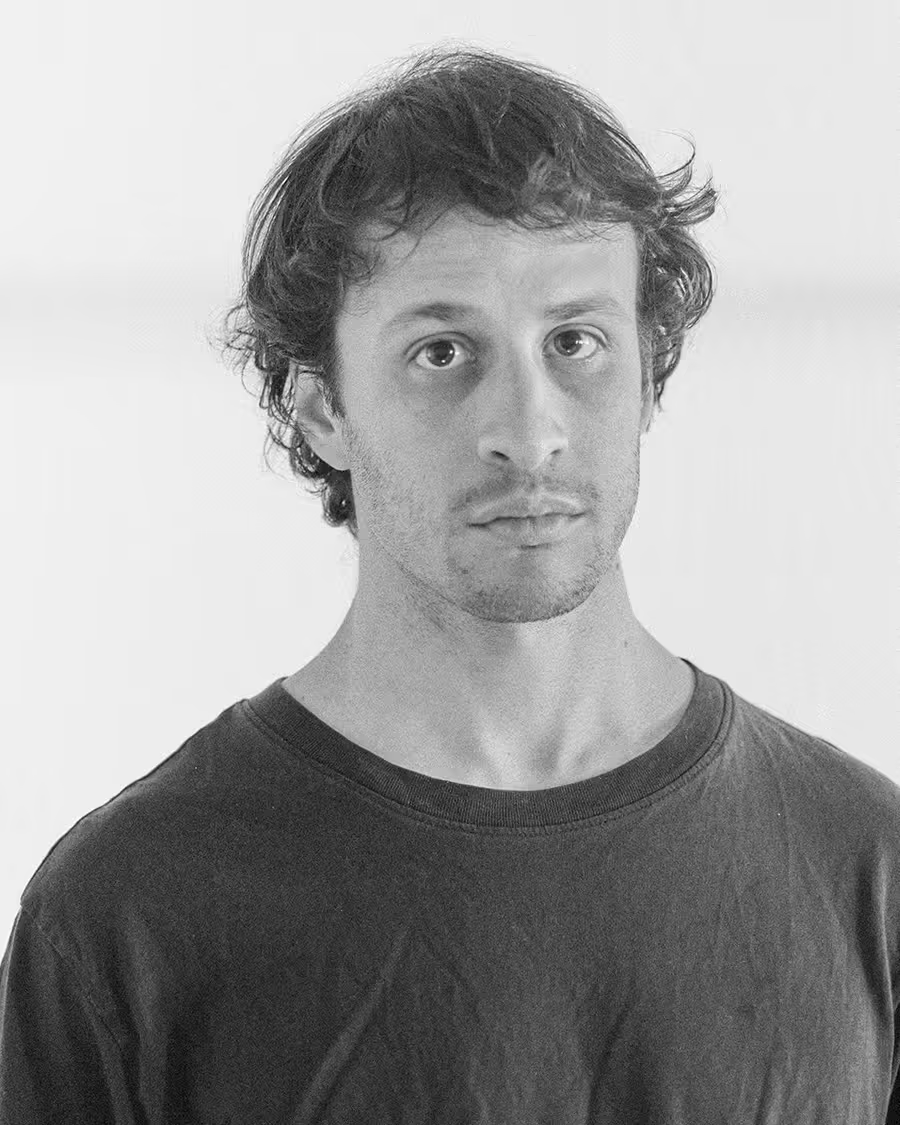
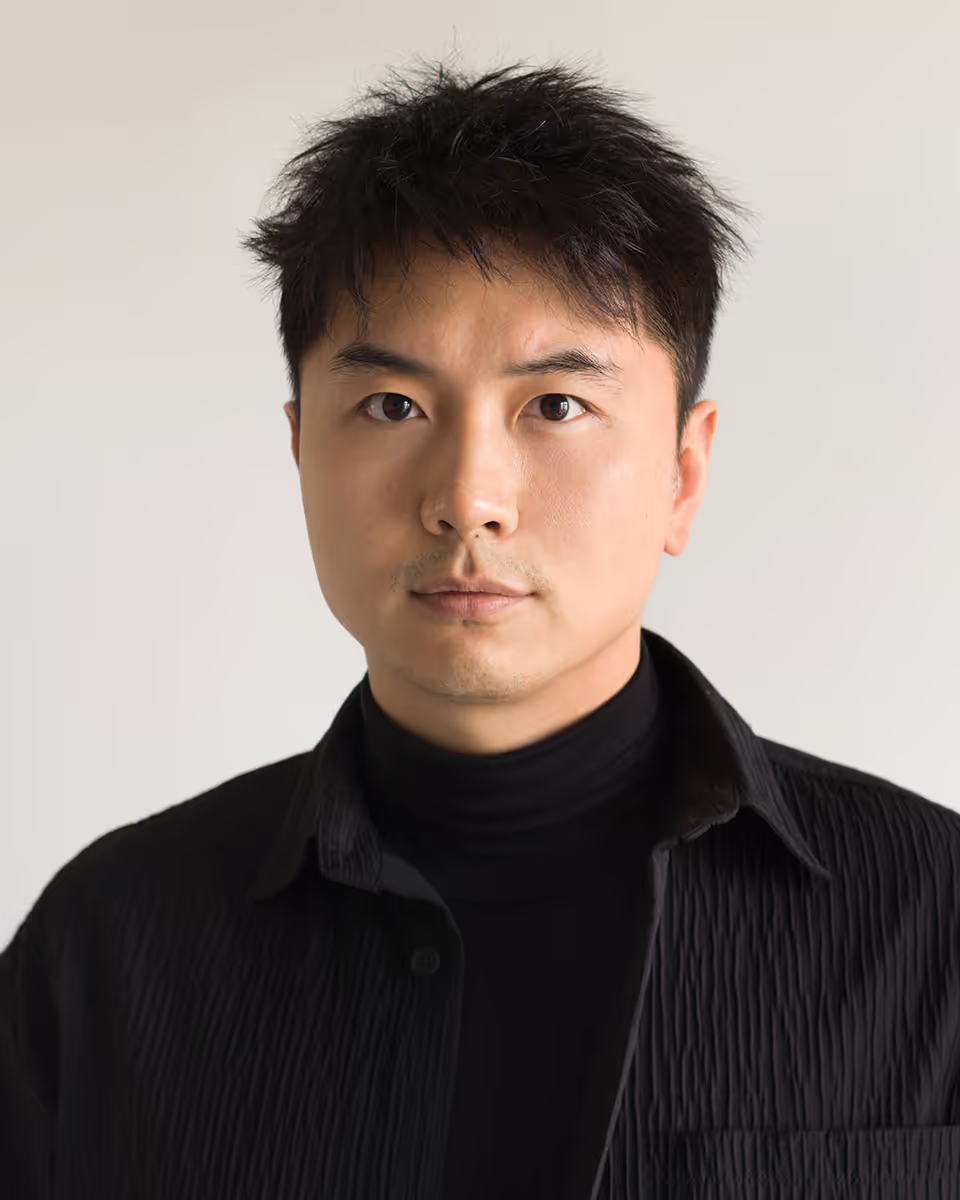
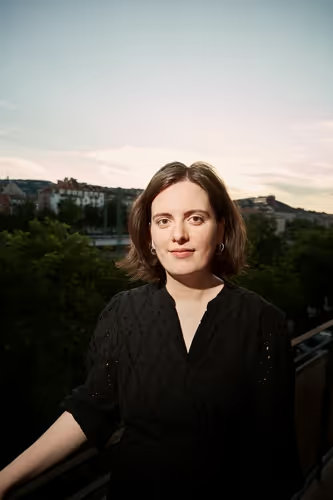
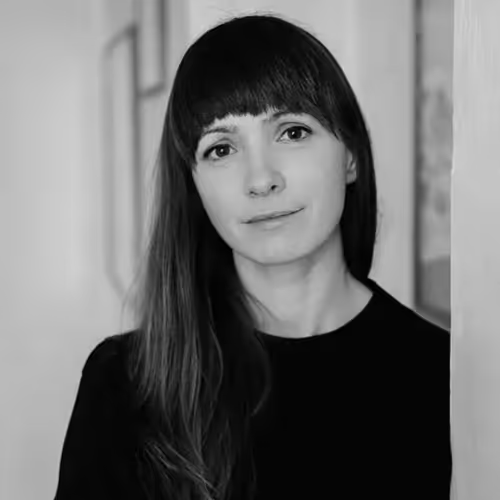
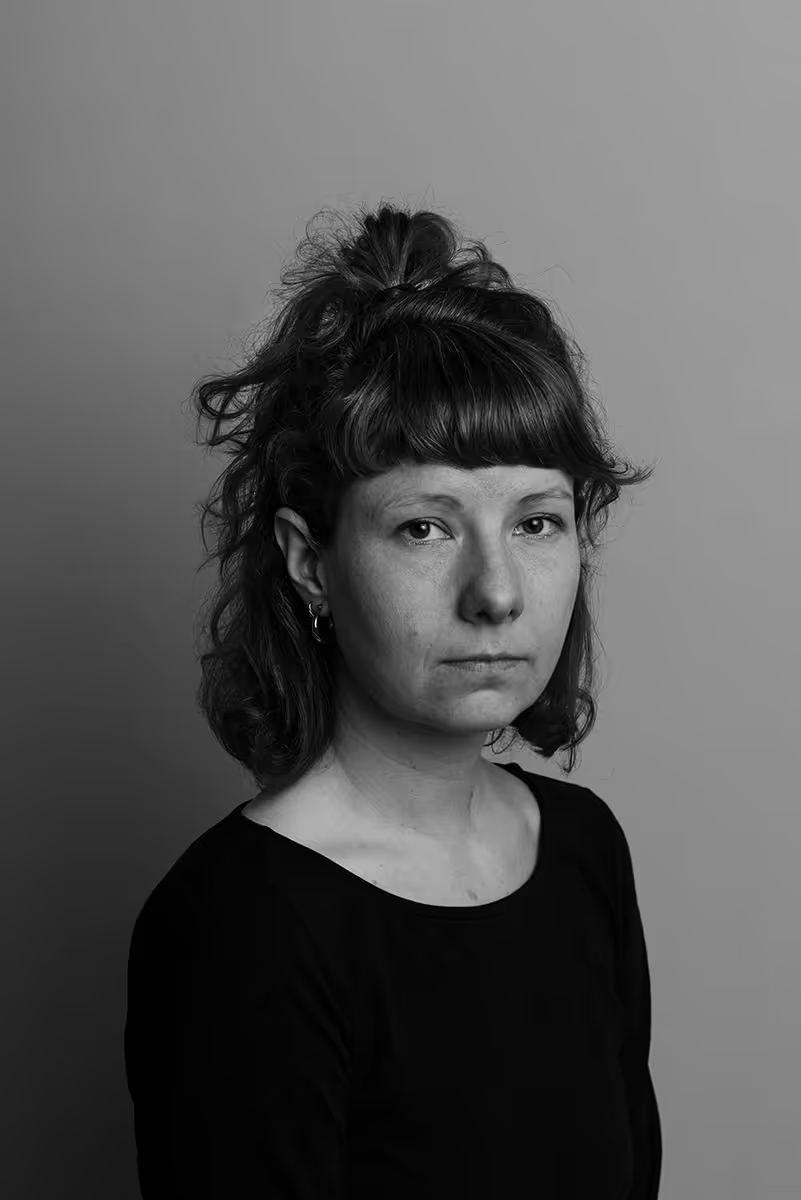
Anna Kereszty

Lives and Works in
Budapest, Paris
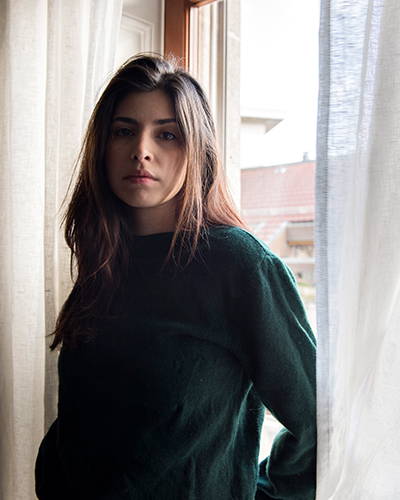
Anna Kereszty (b. 1997) is a Hungarian photographer who graduated from École Nationale Supérieure des Arts Décoratifs in 2025. Her work weaves past and present into intimate visual essays that explore memory and time. Born in Budapest but having lived abroad for many years, she has the impression of moving between two parallel realities—one grounded in the present, and the other shaped by nostalgia, memory, and echoes of a past. This duality informs her research driven practice, which examines how personal and historical narratives overlap, blur, and transform one another. She often incorporates archival photographs and uses associations, visual parallels, and a literary approach in her creative process. She currently lives and works between Paris and Budapest.
Projects
2024

Adrian Alcott

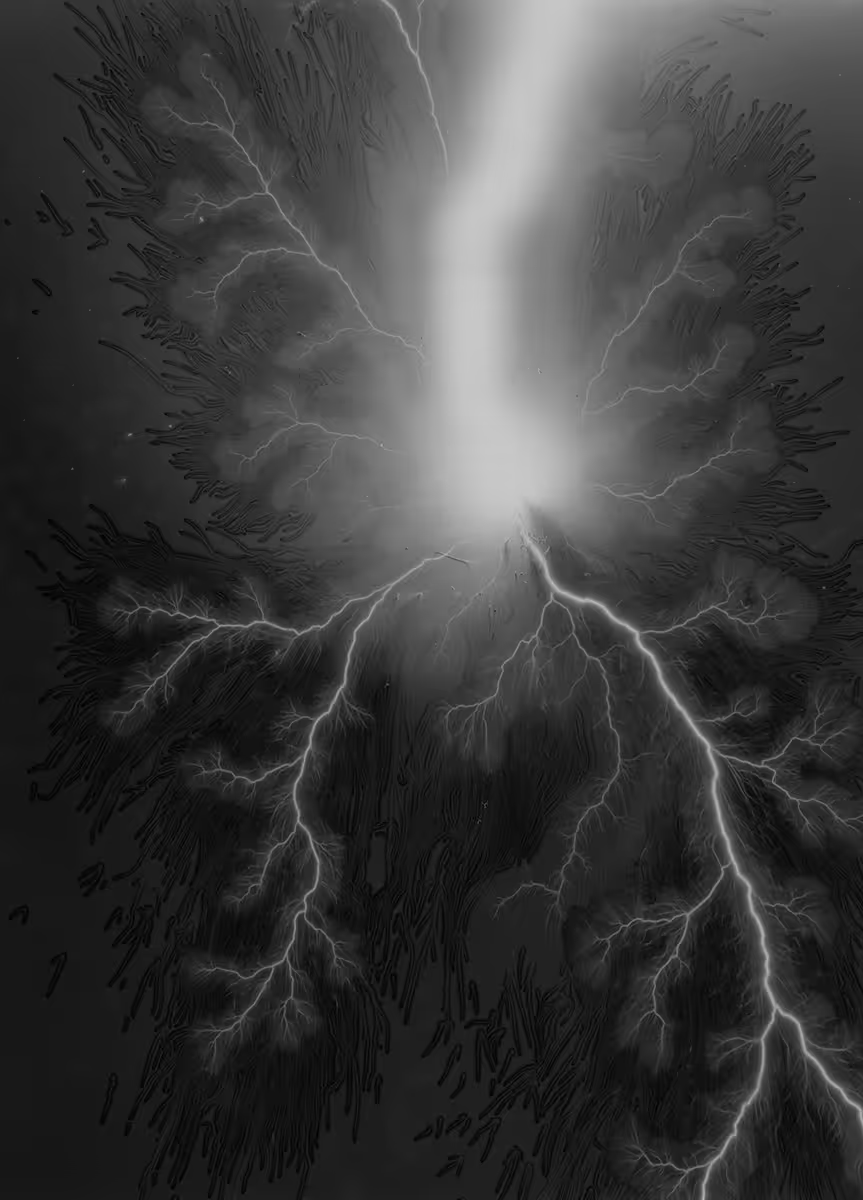
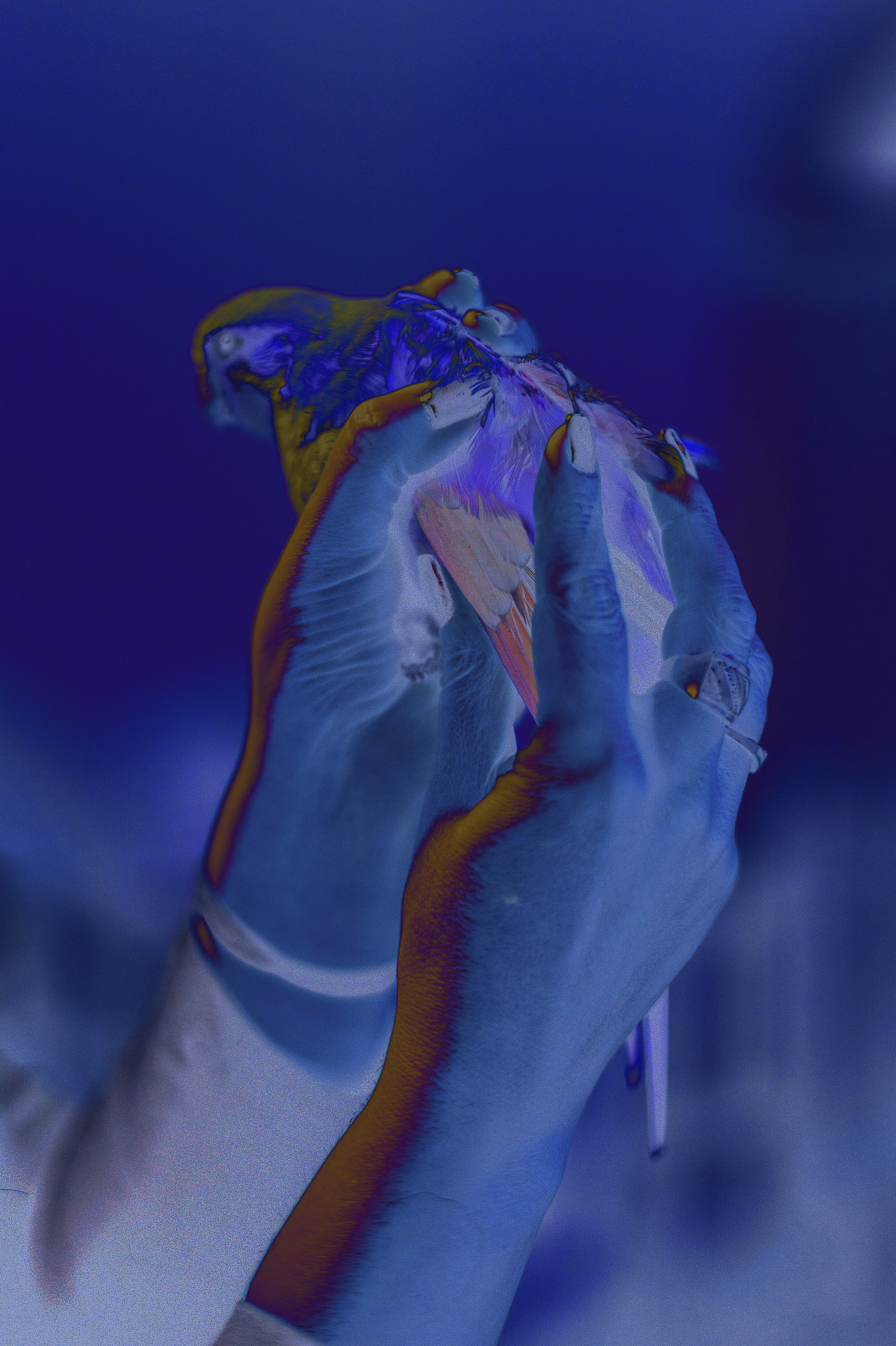
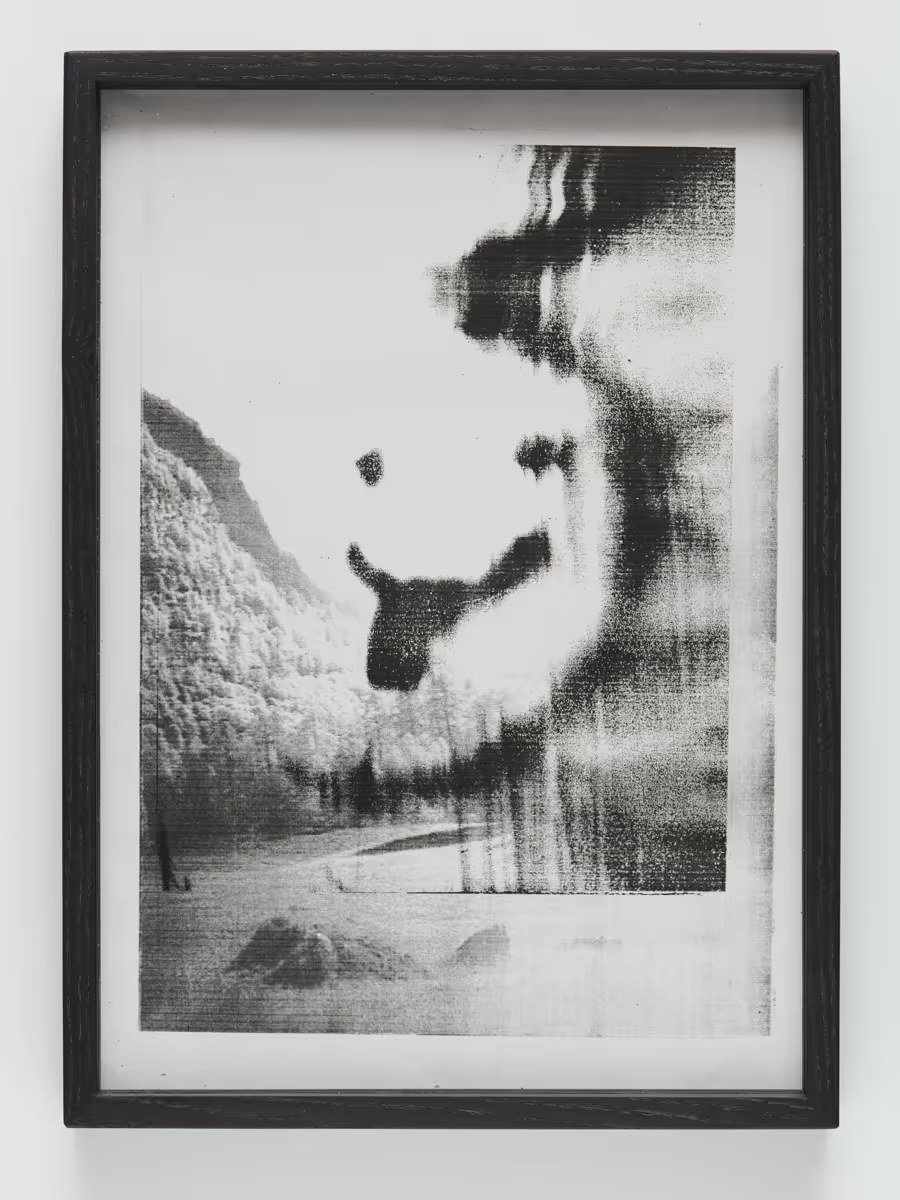
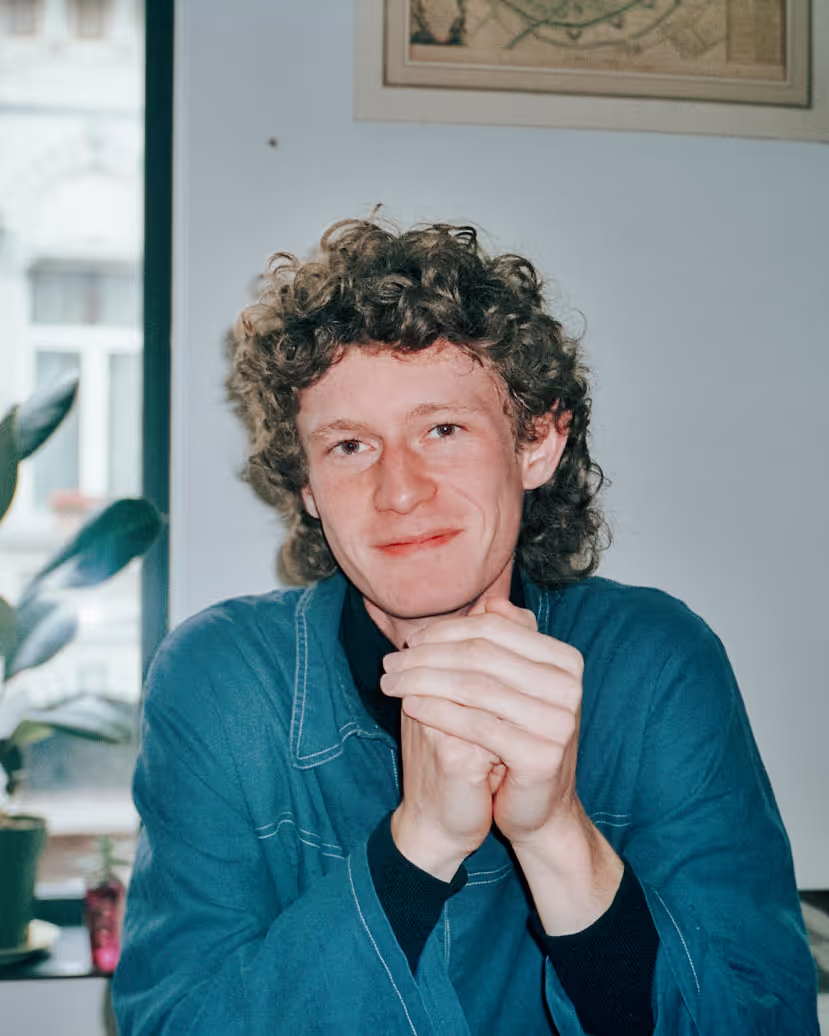
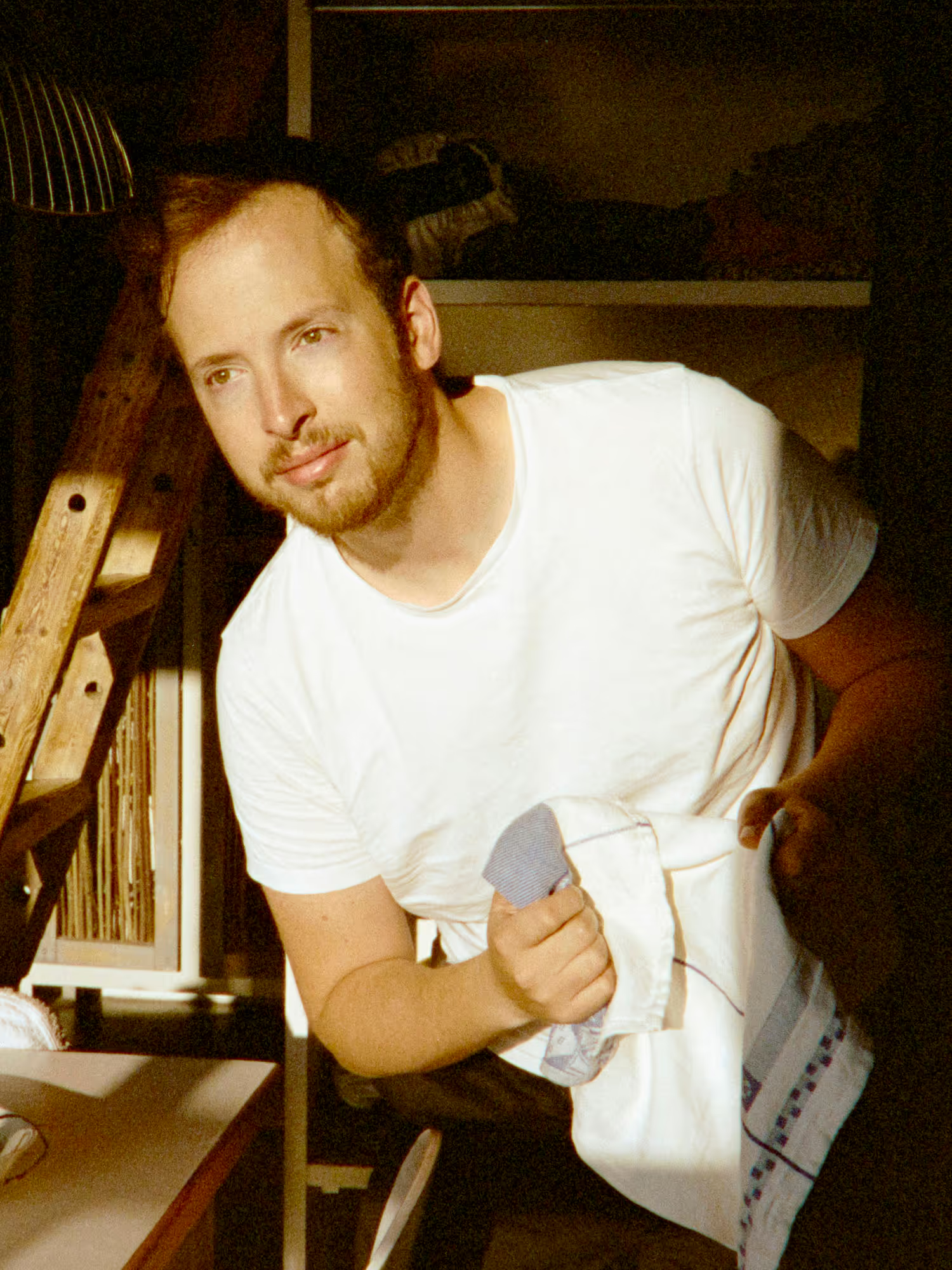
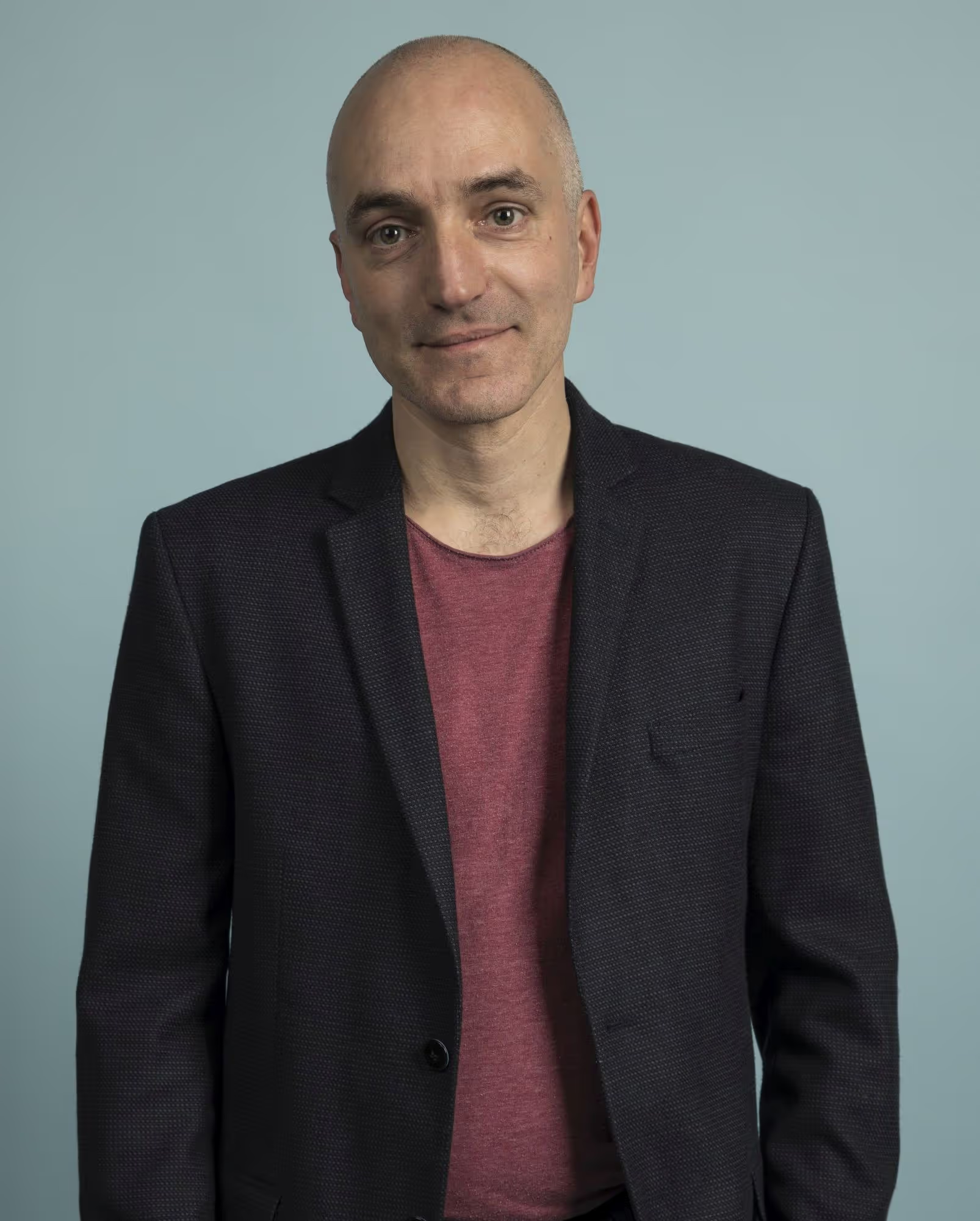
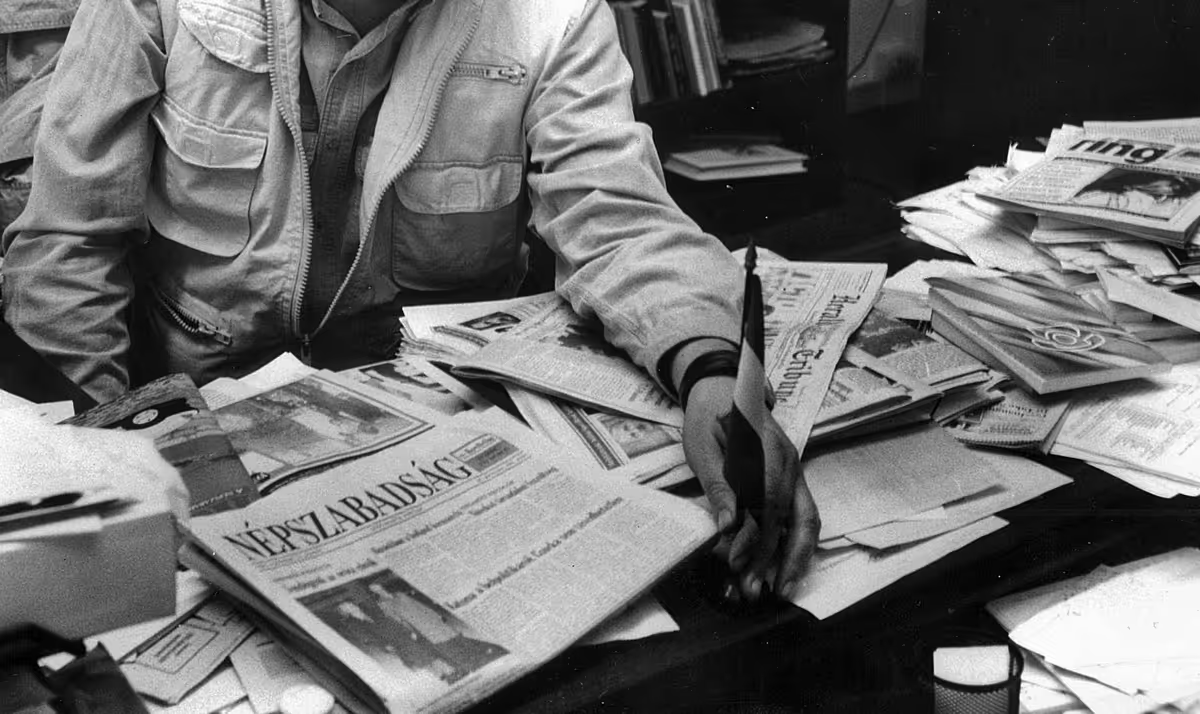
This project is a visual investigation through socialist Hungary and contemporary Paris, blending observation, fiction, and family history to explore the blurred lines between truth and storytelling, surveillance, memory, and a mysterious neighbor. What began as casual observation of my neighbor from my Paris apartment window turned into a daily ritual and, eventually, an obsession. The man I couldn’t help but photograph—despite the guilt of watching someone secretly— became the central figure of an imagined biography. I saw him as a writer or journalist, a fiction that mirrored my grandfather’s life who was a Hungarian journalist and foreign correspondent in Cairo during the 1970s, surveilled and at times asked to write report to the government. My grandfather blurred the boundaries between truth and fiction in his own writing, publishing books that mixed reportage with his imagination. That narrative strategy became a model for my own approach. I blend the photographs taken from my window in Paris and archival documents, including pages from my grandfather’s actual state surveillance file which I accessed through Hungary’s historical archives. My neighbor became an extension of my grandfather. The fiction I built around him creates a dialogue between invented lives and documented histories. The series embraces ambiguity: what is real, and what is imagined? What does it mean to observe—and to be observed? Birds recur throughout the series as metaphors for surveillance: omnipresent, watchful, unnoticed. The system that shadowed my grandfather’s generation still echoes today. This is also a story about grief, absence, inherited secrecy—and the power of images and archives to construct new narratives. The project’s title references my grandfather’s pseudonym: András Kereszty, alias Adrian Alcott, alias the mysterious neighbor.
2024

Adrian Alcott

This project is a visual investigation through socialist Hungary and contemporary Paris, blending observation, fiction, and family history to explore the blurred lines between truth and storytelling, surveillance, memory, and a mysterious neighbor. What began as casual observation of my neighbor from my Paris apartment window turned into a daily ritual and, eventually, an obsession. The man I couldn’t help but photograph—despite the guilt of watching someone secretly— became the central figure of an imagined biography. I saw him as a writer or journalist, a fiction that mirrored my grandfather’s life who was a Hungarian journalist and foreign correspondent in Cairo during the 1970s, surveilled and at times asked to write report to the government. My grandfather blurred the boundaries between truth and fiction in his own writing, publishing books that mixed reportage with his imagination. That narrative strategy became a model for my own approach. I blend the photographs taken from my window in Paris and archival documents, including pages from my grandfather’s actual state surveillance file which I accessed through Hungary’s historical archives. My neighbor became an extension of my grandfather. The fiction I built around him creates a dialogue between invented lives and documented histories. The series embraces ambiguity: what is real, and what is imagined? What does it mean to observe—and to be observed? Birds recur throughout the series as metaphors for surveillance: omnipresent, watchful, unnoticed. The system that shadowed my grandfather’s generation still echoes today. This is also a story about grief, absence, inherited secrecy—and the power of images and archives to construct new narratives. The project’s title references my grandfather’s pseudonym: András Kereszty, alias Adrian Alcott, alias the mysterious neighbor.
Anna Kereszty
was nominated by
Robert Capa Contemporary Photography Center
in
2026
Show all projects
Each year every member of the FUTURES European Photography Platform nominates a set of artists and projects to become part of the FUTURES network.

Ákos Levente’s practice repositions analog photography within the 21st-century media environment, examining archives, authentication, AI-generated imagery, and ethical questions of sustainability.

In Emese Tóthová’s work, childhood appears not as a closed past but as a continuously reinterpreted foundation of becoming an adult; using her own living space as a performative site, she explores liminality and presence through the honesty of awkwardness and fragile moments.

Emma Szabó’s intimate and analytical visual language goes beyond mere documentation, capturing the isolation and identity formation of Generations Z and Alpha while articulating universal generational experiences through local contexts.

Anna Kereszty’s research-based, narrative projects unfold at the boundaries of reality and fiction, where observation, memory, and storytelling mechanisms intersect.

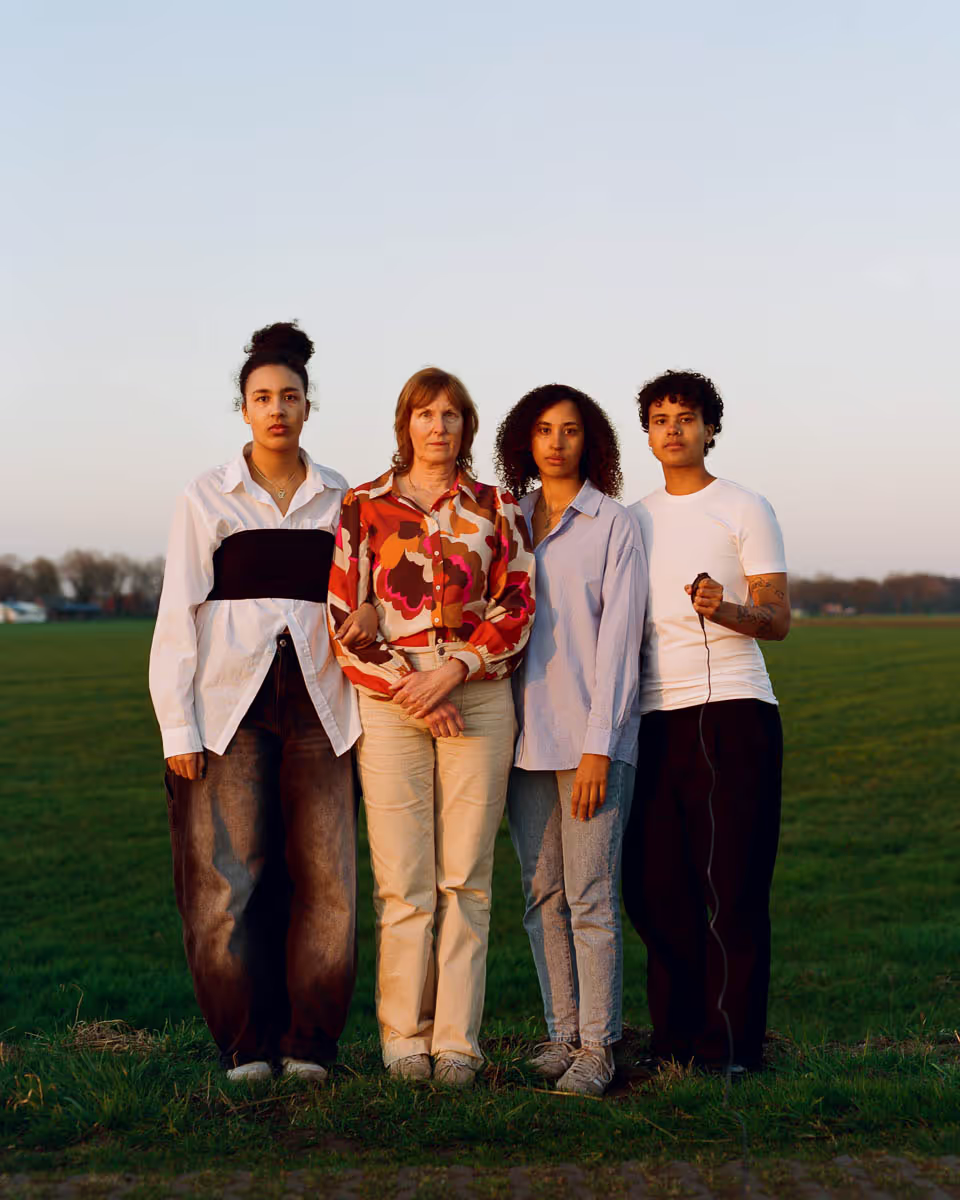
Vanessa Lucrezia Francia employs a reflective, sensitive, and playful photographic approach to address questions of identity, female roles, and intergenerational and intercultural relationships, portraying her subjects with dignity, affection, and sharp critical awareness.

Through this selection, Capa Center highlights the original, complex, and internationally relevant voices of contemporary Hungarian photography within the FUTURES platform.

Members of the jury:

Katalin Kopin, curator of the Capa Center

Emese Mucsi, curator of the Capa Center

Zsófia Rechnitzer, artistic director of TORULA, owner of the Rechnitzer Gallery

Dániel Szalai, photographer, visual artist, doctoral student at MOME, FUTURES Talent2020

István Virágvölgyi, artistic director of the Capa Center
Newsletter