The FUTURES
Residency Program
The FUTURES Residency Program provides emerging artists with time, space, and resources to develop new work, emphasizing artistic process and research, while offering opportunities to push the boundaries of their practice and engage with contemporary themes.

residency theme
how it works
program
At the beginning of 2025, FUTURES introduced a Research Residency Program across three locations: FUTURES Hub in Amsterdam, Capa Center in Budapest, and ISSP in Riga. Selected from a pool of nominated FUTURES artists, participants are chosen by a diverse panel of experts. Open to all artists nominated in previous years, the program aims to foster production, exchange, and meaningful artistic growth. Applicants are evaluated based on their artistic practice and the quality and relevance of a residency project developed specifically for their time with FUTURES.
- Professional Mentorship: Residents receive tailored mentorship from experts relevant to their project, offering guidance and support throughout the residency.
- Public Engagement and International Exposure: Each residency concludes with a public event, and the artist's work is promoted through communication channels of FUTURES.
- Fair and Inclusive Working Environment: The residency ensures fair pay, safe working conditions, and a commitment to inclusivity.
- Access to the FUTURES local network and introduction to Amsterdam art and contemporary culture scene.
from the residents
- Residents are encouraged to maintain a Visual Diary, posting weekly updates about their creative process on FUTURES’ social platforms. This offers an inside look at the artist’s journey.
- A Video Portrait is created during the residency, offering a personal insight into the artist and their practice. This video is shared through FUTURES’ platforms, extending its reach.
- A public-facing event, such as an open studio, workshop, exhibition or artist talk, is an essential component. This event offers residents a chance to share their work and process with the local community. This will also be live-streamed, allowing international audiences to engage with the residency's work.
- Interview with a local writer about the artist's creative process during their residency. This written interview will be featured on the FUTURES website, offering further insight into their work and artistic journey.
residency locations
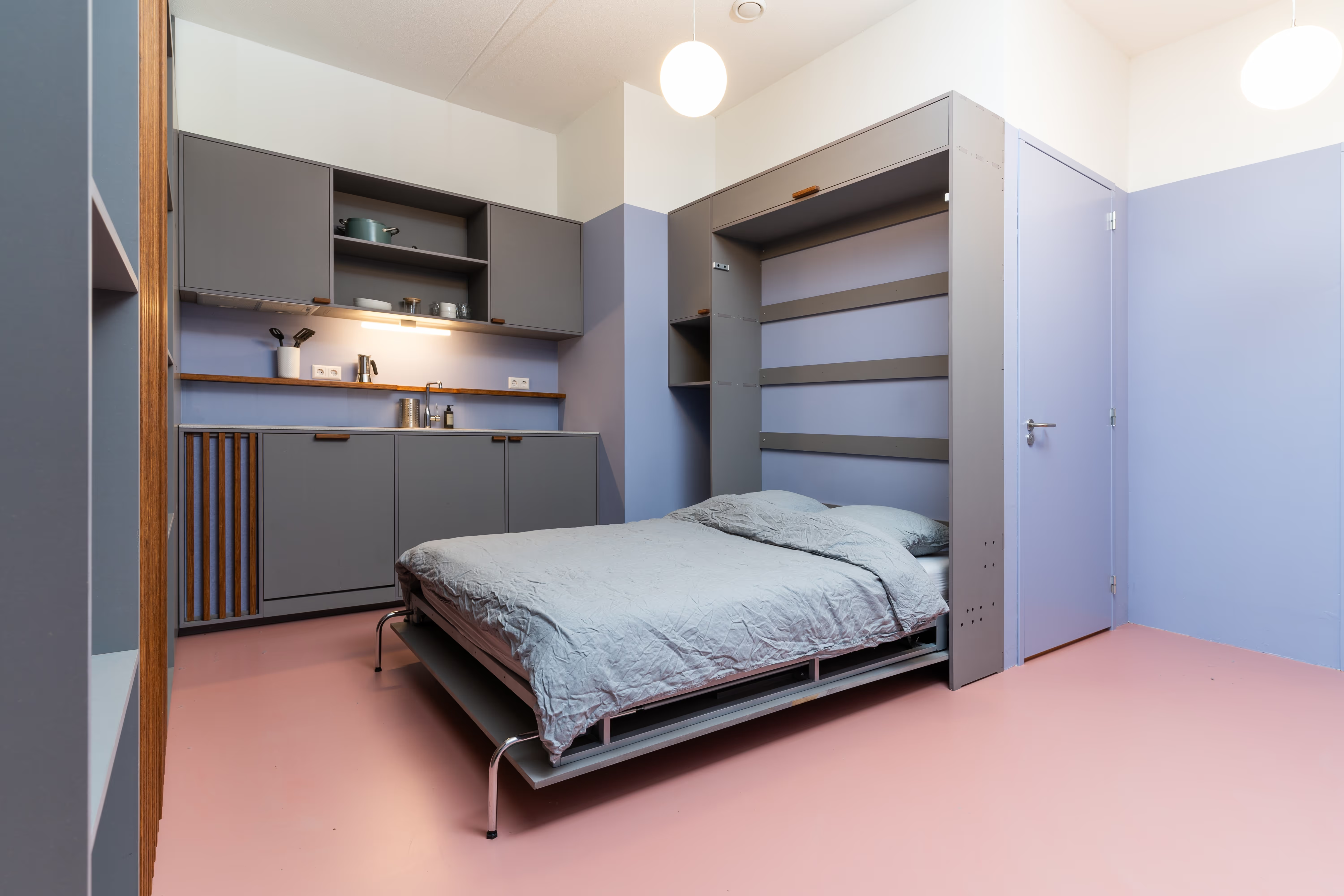
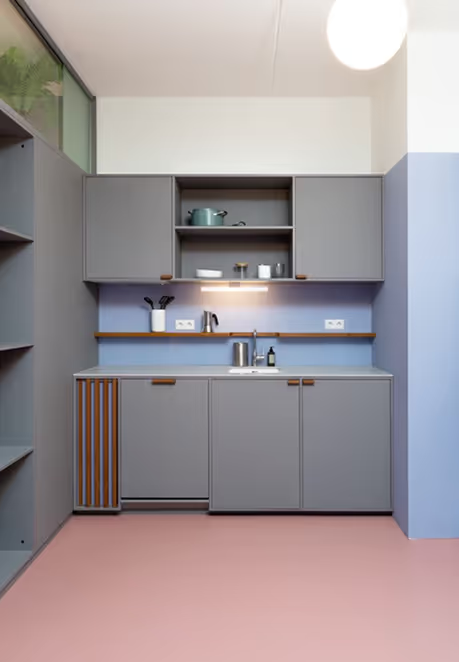
Futures Hub, Amsterdam: In 2023, FUTURES launched its first residency program at the FUTURES Hub, a vibrant space in Amsterdam that serves as the platform’s global headquarters and flexible exhibition venue. Situated on a former industrial site, the Hub offers a fully equipped live-work environment, including an atelier, furnished apartment, and event space. It welcomes artists from diverse regions and cultural backgrounds for both short- and long-term stays.
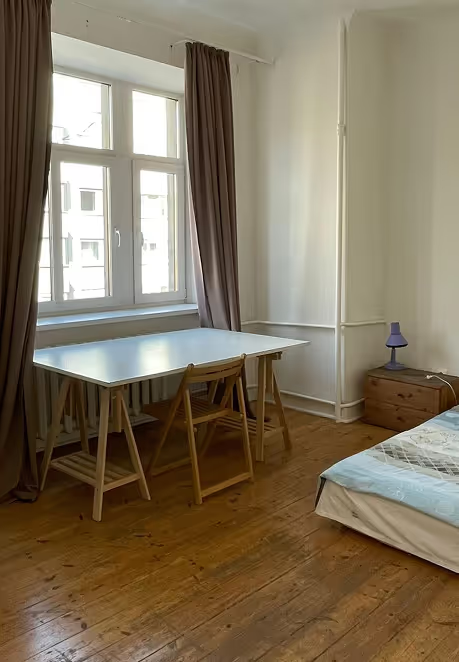
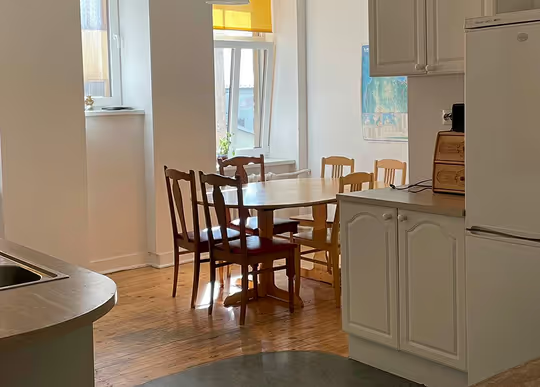
ISSP, Riga: The resident will be housed at the ISSP Riga Residency apartment in the city centre, shared with other two artists. The accommodation offers comfortable conditions for living and working - a separate bedroom with a working space, spacious shared living room and a fully equipped kitchen. The resident will have access to ISSP office facilities including use of printer, scanner, ISSP photography library and studio lights.
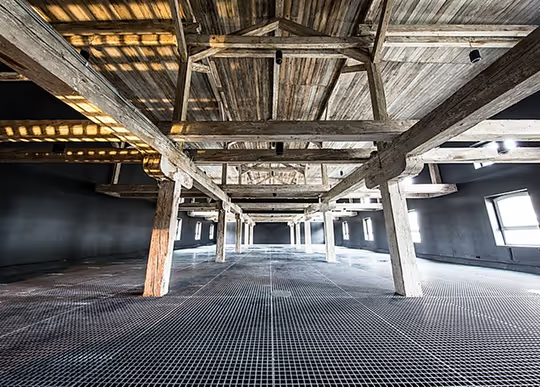
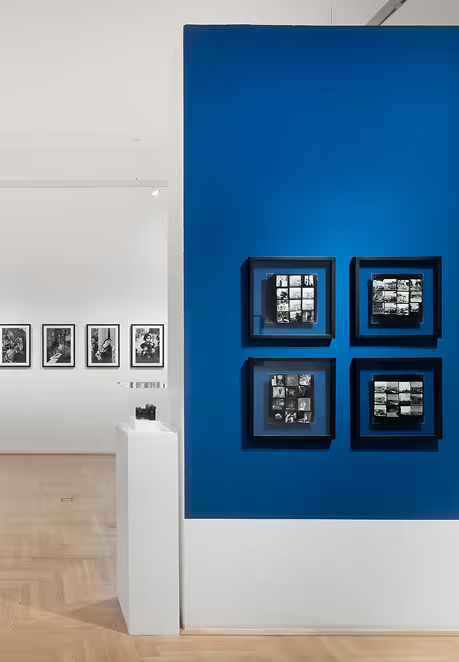
Capa Center, Budapest: The Capa Center residency program offers all entering participants a fully furnished private room within a communal apartment located on the Art Quarter Budapest premises, a studio space catering to the project’s requirements within its 400 m2 shared studio in the coolest postindustrial area of Budapest. Capa Center provides varied services to integrate the residents into the local art scene and contribute in establishing professional connections that best support their work and career. In addition, the residency will offer the possibility to organise a presentation at the Capa Centre in downtown Budapest, and use the Capa Centre's office facilities, including the printer and scanner.
Residency Archive
Following a degree in photography at CalArts, in California and then Yale, Eva O’Leary (1989) has had three solo exhibitions in 2017: Happy Valley, Meyohas, New York; Concealer, Vontobel, Zurich and Spitting Image, Crush Curatorial, New York.
The perfect skin and the smooth image which accompanies it, Eva O’Leary knows all too well the different ingredients and recipes of commercial photography. She too, as a teen, ate this cake which now, as an artist, she presents to us on a plateau. In a refrigerator rests a sponge cake, accompanied with printed icing: a saccharine young woman with perfect blow-dried hair watches us. Since it is said that revenge is a dish best served cold, this is the fate which the photographer reserves for the young blonde haired woman with the Colgate smile and her diktat. She grew up in the United States of America in a campus town whose name is almost an order – Happy Valley – and remembers her years spent masking her Irish head in the hood of a must have Abercrombie sweatshirt. The series, Happy Valley, is rooted in her town and her adolescent memories, describing an environment which is intrusive and worrying, modelling individuals whose self identity has been traded for a generic body. With the more recent Spitting Image, it is the years before, the adolescent vulnerability which are exposed. Young girls, around fifteen years old, present themselves to us, tightly framed on a vibrant blue backdrop which permits neither an escape for the gaze, nor breathing room for the model. Eva O’Leary accompanies these photographs with videos: perched upon a stool, we watch them searching for the person they hoped to find in the mirror. In this interval the photographer reopens the field of representations and with it, the freedom to be complex, different, uncertain, unique, human.
Ksenia Kuleshova is a photojournalist and visual artist. She has been featured in the British Journal of Photography as one of thirty-one women to watch (2018), as one of twenty rising women photojournalists by Artsy (2019), and as one of The 30: New and Emerging Photographers to Watch (2022). Her work has appeared in the New York Times, National Geographic, Wall Street Journal, DIE ZEIT, and De Standaard. Ksenia’s first book “Ordinary People” was published by The New Press (New York) in December 2023.
Ulla Deventer, born 1984 in Germany, holds a Master of Fine Arts and is an international working artist and research candidate at the Koninklijke Academie voor Schone Kunsten Antwerp.
Since 2019, she became part of TIME-LABS: Cuba Photography Missions, a research project in Havana, Cuba, supported by VLIR-UOS Belgium and in collaboration with European and Cuban photographers and the Instituto Superior de Arte Havana.
Her work has been exhibited internationally and has been supported by several scholarships and awards. It has been selected for the “Ones to Watch” by the BJP, as well as for the .tiff talents by the Fotomuseum Antwerp. She studied at the Hochschule für Bildende Künste Hamburg, the Ecole Nationale des Beaux Arts de Lyon and the Royal Academy of Fine Arts Antwerp.
In her works, Deventer questions the interdependencies of women on social norms. She explores the female body, ideas of beauty, taboos, and sexuality. Recently, she has been involved in international research on sex work, based in Brussels, Athens, Paris and Accra.
Throughout my practical and theoretical based art, I work across mediums, with a focus on photography. I explore forms of the female body, ideas of beauty, desires, taboos and sexuality. Subsequently, I analyze the interdependencies of women on social norms. I am interested in how society shapes norms that influence the representation and perception of women and how the female body can be used as a tool of power.
Sex workers are sensitive observers of our society, especially about what we do not dare to see. Thus, I consider this work a reflection on society as a whole. Sex is at first place about pleasure, desire and lust, addiction and ecstasy. At the same time, it is about power, about hierarchies, about interrelationships of men and women. It appears that the female body becomes a political weapon. How we live and talk about sex says much about our taboos and fantasies and finally how society is created by a world that exists by judging the unknown instead of listening to each other.
I am grateful for every single conversation and the time I could spend with the women who became part of this work. I cannot express in words how much they taught me about life, about our society and finally about myself.
I did not believe how much we have in common. I found my soulmates in these women who are not only crucial for the existence of this body of work, but close friends that I don ‘t want to miss anymore.
With this work I share some personal insights that truly are my own observations and therefor fully subjective on this topic. It is a collection of images and notes from women I admire and who I met in Brussels, Athens, Paris and Accra.
ANGYVIR PADILLA (b. Caracas, Venezuela, 1987) is a Brussels-based visual and performance artist. She studied Art in the public space at the Royal Academy of Fine Arts of Brussels (2011-13, BA), sculpture at ENSAV La Cambre (2012-15, MA), and Fine Arts at LUCA School of Arts of Brussels (2016-18, MA).
Her work has been recently exhibited in numerous venues, including JAP vitrine, Brussels (2023), IKOB Museum, Eupen (2023), Antwerp Art Weekend (2023), CIAP, Genk (2022), Centrale Vitrine, Brussels (2021), Frac Grand Large — Hauts-de-France, Dunkerque (2021-22), and S.M.A.K Museum, Ghent (2021). She has also gained international recognition through exhibitions in Paris, Germany, Athens, and Caracas.
In recent years, Padilla has been granted numerous residencies and awards including the Fiminco Foundation residency in Paris (2022-23) and long-term residency at Moussem Nomadic Art Centre in Brussels (2023-). She received the Sabam prize of ArtContest in Brussels in 2020, the prize of the Watch This Space biennial in Lille in 2022, and was one of the laureates of the Friends of S.M.A.K prize in Ghent in 2021. Her work is currently on view at The Kunstverein Friedrichshafen in Germany. In 2024, Padilla was selected for the MINO Female Artist Mentorship program with mentors Otobong Nkanga and Léonard Pongo, and will be part of the MLeuven residency program at Cas-co in Leuven and Morpho residency program in Antwerp.
Join The Cool is a creative collective, created in 2016 as a platform for the interplay of various Ukrainian artists in different mediums.
In our work, we explore the result of the interplay between previous and present generations, between the crew and the entertainment we provide for the locals in the places where we shoot. We use tools like traditional film photography, performance, and mixed media, operating at the interface between non-traditional documentary and marginalized fashion photography, in the contemporary environment.
Once a year we put people of our generation in conditions where they intensely experience the conflict between the cultural wealth we inherit from previous generations and the new international, material, spiritual values that impact us in the modern world. Reconciling and integrating this conflict allows us to move on culturally and spiritually and to reveal hidden aspects of life in Ukraine.
Tayo Adekunle is a British Nigerian photographer based in Edinburgh. Working a lot with self-portraiture, she uses her work to explore issues surrounding race, gender and sexuality as well as racial and colonial history.
Her work is centred around reworkings of historical tropes relating to the black female body, taking from contexts that include art historical paintings and sculptures as well as 19th century colonial photography. She works to subvert established notions about black female sexuality and the standard of beauty ascribed to black females. By placing historical imagery in a contemporary context, the relationship between the treatment of the black female body in the past and its treatment in the present day is explored. Since graduating from Edinburgh College of Art with a BA (Hons) in Photography, she has been a recipient of the SSA New Graduate Award and the Degree Show Purchase Prize, resulting in her work becoming part of The University of Edinburgh Art Collection.
Łukasz Rusznica (b. 1980) is a photographer, curator, and educator based in Wrocław, Poland. Since graduating in cultural studies from the University of Wrocław, he has exhibited his works in galleries and museums in Poland and abroad.
He is the author of the photobooks Smog, Near, Infra, Toskana, European Eyes on Japan Vol. 18, and The Most Important Things I Do Not Tell You At All, designed by Thomas Schostock. His works have been published in SZUM, BIURO, LaVie, Machina, POST, and Bad to the Bone. He is a winner of the Show OFF Section of the Krakow Photomonth Festival 2012 and the WARTO 2015 Award.
In 2016 he was selected to take part in European Eyes on Japan—a unique project inviting photographers from European Capitals of Culture to capture everyday life in Japan. He is the winner of Griffin Art Space Prize—Lubicz 2017 for the best portfolio at Krakow Photomonth 2017. Rusznica currently runs a photography gallery, Miejsce przy Miejscu, dedicated to promoting emerging photographers from Poland and abroad.
Balázs Turós (b. 1990) studied at the Department of Photography at Budapest’s Moholy-Nagy University of Art and Design. After finishing his BA, Turós moved to England, where he was introduced to FotoNow – a media-based social enterprise in Plymouth, with whom he worked for two years. Having returned to Budapest, he pursued a Master of Photography course at Moholy-Nagy University of Art and Design. Turós was awarded the József Pécsi Fellowship in 2018, 2019 and 2020. In 2021, he participated in the Fellowship of the Robert Capa Photography Grand Prize. The following year, his works featured in the Open Program of Fotofestiwal Lodz, Poland.
Wbsite: balazsturos.com
Instagram: balazs_turos
Eva Maria Bouillon (b. 1997) currently lives and works in Bruges, Belgium. In 2019, she received a Bachelor’s degree in Visual Arts and Photography from the LUCA School of Arts, followed by a Master’s degree in 2020. Her work probes at the relationship between storytelling, family history and personal experience. In recent years, her work has featured in several group exhibitions and international film festivals.
Suwon Lee (b. 1977, Caracas, Venezuela) is currently based in Madrid, Spain. Through photography and various media, she tracks her passage through this lifetime. In this sense, her work is an open-ended, existential, and ongoing process, determined by the events of her life. She uses her condition as a cross-cultural woman, daughter of Korean migrants born in Venezuela and then forced to migrate, to question notions of identity, time, territory, embodiment, exile, and affectivity. She is a hybrid, a being who questions herself and transforms constantly, adapting to each context, thus adding a new layer of being to her work with each opportunity.
Lee has exhibited individually in Caracas, Madrid, and in international group shows such as the Guangzhou Image Triennial curated by Gerardo Mosquera (2021); Vincent Price Art Museum, California, USA (2018); Arizona State University Art Museum, USA (2017); Fondation Cartier pour l’Art Contemporain, Paris, France (2013); Museo Amparo, Puebla, Mexico (2014); the 9th Bienal do Mercosul (2013), and Biennial of the Americas 2013: Draft Urbanism. She has contributed to many other shows in the US, Brazil, Venezuela, Panama, Spain, Colombia, Chile, Seoul, and Paris, among others.
Lee’s works are in the collections of MoMA in New York (USA), Colección Patricia Phelps de Cisneros (USA), Cisternos Fontanals Art Foundation (CIFO) in Miami (USA), Colección Banco Mercantil (Venezuela), Museu de Arte Brasileira da Fundação Armando Alvares Penteado (Brazil), and in various private collections in Venezuela, Colombia, USA, Spain, Germany, Costa Rica, Argentina, and Puerto Rico.
Lee studied photography at the Speos Paris Photographic Institute in 2001–2002. In 2006, she took the PHotoEspaña Masterclass with German photographer Axel Hütte and subsequently travelled with him on several photography trips in Latin America, Europe, and Asia from 2006 through 2019. She also studied with Nelson Garrido in his experimental photography workshop in Caracas, Venezuela (2007).
In addition to her career as a visual artist, Lee co-founded and was co-director of the Venezuelan artist-run space Oficina #1 (www.oficina1.com) for more than ten years (2005–2015), helping to launch the careers of emerging artists from Venezuela.
Jan Durina is a Slovak interdisciplinary artist who utilizes a diversity of medium to develop personas and grow the complex narratives they exist in. Through performance, photography, and sound Durina unfolds the nuance of each narrative, grappling with themes of loneliness, loss, the boundaries between nature and the body, and the distortions of the human mind as experienced within an ever developing gender and identity. Through this process Durina produces art works
in the form of music, performance, lm, and photography, seamlessly and con dently moving between exhibitionary to performance contexts.
http://jandurina.com/projects/recent-works/cute-tragic/
Born in Maputo, Euridice Zaituna Kala (1987) is an artist based in Paris. She was trained as a photographer at the Market Photo Workshop, Johannesburg.
Recent monographic exhibition includes: Untitled, ADN_ Sea(e)scapes, 2021 at galerie Salon H, Paris, and I, the Archive,2020, at Villa Vassilieff, Paris. Kala’s most recent group exhibitions include: This is Not Africa, unlearn what you have learned, 2021 at Aros Museum, Denmark, Un.e air.e de famille, 2021, at Museum Paul Elourd, Saint-Denis, France, Polyphony, 2021 at Gera Museum, Gera, Germany. Kala’s most recent performances include: Stranger, Danger, Wait it’s a Prayer Room, Centre Pompidou, 2019, Mackandal Turns into a Butterfly: A Love potion (2018), Le Pouvoir du Dedans, La galerie Cac de Noisy-le-Sec (2018), Euridice Zaituna Kala Shows and Doesn’t Tell, galerie Saint-Severin (2018). She is the winner of the ADAGP/ Villa Vassilieff Fellowship 2019-2020, a finalist of the SAM art Prix (2018) and also a finalist for the prize for contemporary talent, François Schneider Foundation (2018). Kala’s work will be included in the 5th Casablanca Biennial, Morroco, and she an artist in residency at Urbane Kuenst Ruhr in Germany in 2019-2020. She is the founder and co-organiser of e.a.s.t. (Ephemeral Archival Station), a lab and platform for long-term artistic research projects, established in 2017.
London based photographer Phillip Prokopiou was born to Greek immigrants in South Africa. Originally from a fashion and costume design background, the self-taught photographer established a practice under the name Studio Prokopiou in 2014 which he co-founded with his partner in life and art Panos Poimenidis.
The images mainly feature personalities from the world’s nightlife, fashion and art communities. The work is an exploration of queer identity, self-invention and LGTBQI culture informed by a love of high-camp, kitsch aesthetics and art history. They aim to capture both the surface and the interior world of the subject halfway between truth and fantasy. Much as Susan Sontag elucidates in ‘Notes on Camp’, Studio Prokopiou is the lie that tells the truth.
Josef Janošík (b. 1995) is a photographer based in the Czech Republic. In his work, he searches for and relives his childhood memories – however corroded and unreliable they may be. Exploring the limits of human perception is important for him in general as well as the elusive uncertainty that lies behind them.
Dafni Melidou (b. 1990, Greece) is a visual artist whose multidisciplinary practice combines research, photography, writing and multi-media experimentation. Coming from a scientific background her working and research methods are versatile, and she approaches her projects from many angles. She works with her own photographs, found images, tactile materials and smells, often re-appropriated and constructed into new constellations, shapes or forms.
Melidou's experimental works start with her daily encounters of events in the mass media and her personal observations. Her themes center around gender and social injustices, the complexities of representation and our conflicting perception of reality. A common thread in her work is the understanding of materiality and the physical world in a digital age. Her fascination lies with creating non-conclusive and often confusing stories that call for an open interpretation and invite the viewers to re-think dominant
media narratives.
Melidou holds a B.A. in Chemistry, a M.Sc. in Food Science and she is currently pursuing her Master's degree in Photography & Society at The Royal Academy of Art, The Hague (KABK). In 2021 she co-founded cartographydigest.com, an experimental visual platform aiming to stretch the boundaries of photography and map new territories. She is currently based between Rotterdam and Athens.
Alessandro Zoboli (b. 1990) graduated from the Istituto Italiano di Fotografia in 2014. Between 2015 and 2019 he worked in Alex Majoli’s studio as an assistant, refining his skills as a photographer, printer and retoucher. In 2019 he joined Cesura Agency as an official member. Over the past years he has worked on a number of different long-term projects exploring the relationship between North Africa and Europe. Zoboli has also documented the Covid-19 pandemic and housing crisis in Italy; travelling the country from North to South, he photographs the conditions of inequality that characterise western societies, highlighting the forgotten discomfort experienced by millions of families. His ongoing Shine On project explores the multifaceted and elusive face of today’s Britain: a liquid form, constantly changing and contradicting itself in search of a new identity.
Josephina van de Water was born in Oosterhout, the Netherlands, in 1985. She currently lives and works in Antwerp, Belgium.
The project 'The lost paracosmist' is an animated short film by multimedia artist Josephina van de Water. Using digital photography, printed celluloid film, paint, digital scans, video montage, cardboard and extreme patience, she brings a fictitious world to life in fascinating detail. The film was made in the traditional, time-consuming way that requires particular dedication, with each frame individually handcoloured as was done in the first colour movies.
The imaginary island of Paperland is inhabited by a colourful collection of talking animals. Josephina van de Water wrote and narrated the dialogue, giving each animal its own voice, tone and place in her universe. The chronicle guides us through a logical, yet fictitious, tale, in which we learn about Paperland’s geography, history, language, culture and religion.
As in every good fable, imagination is closely accompanied by reflection. While The lost paracosmist focuses on the irresistible charms of storytelling, it also warns the audience to beware of stories. They have the power to contort our perception of the world and disturb our relationship with reality.
The endearing cardboard animals in their warm, glowing colours, and the gentle, motherly voice of the narrator, are reminiscent of children’s programmes. However, the topics covered in this allegory are anything but childish: territorial disputes, political and religious authority and mechanisms of exclusion and esteem all make an appearance, allowing inequality and frustration to creep into this seemingly safe cosmos.
- Text by Geert Goiris (.tiff)
Inês Quente (1992, Avintes, Portugal) is a visual artist who lives and works between Vila Nova de Gaia and Porto.
She has a master's degree in Documentary Filmmaking from the University for the Creative Arts (UK, 2017) and a degree in Fine Arts from the Faculty of Fine Arts of the University of Porto (PT, 2015).
She was a grantee of the Culture Moves Europe (2024), a program funded by the European Union and the Goethe Institut.
Her practice navigates themes of ecology, memory and transformation.
She showcases her work regularly since 2013, both nationally and internationally, such as her latest individual site-specific installation For Every Light Its Place, at Gallerí Úthverfa, in the city of Ísafjörður (ISK, 2024).
She took part in the ArtsIceland international artistic residency (ISK, 2023 and 2024) and Grão research and artistic residency (PT, 2023).
Laura Fiorio is an artist working with photography, performance and relational practices. Her projects interact with archival objects, questioning the power dynamics embedded in the editing process of creating memories, their political use and their critical and transformative potential. In her practice, she facilitates collaborative narratives by addressing the entanglement between intimate and institutional histories and fosters discussion on heritage. She holds a BA in Performing Visual Arts (Venice), an MA in Art and Social Work (Berlin) and a Postgraduate Degree in Decolonizing Architecture (Stockholm). Her work was internationally exhibited and produced independently or in collaboration with institutions, including Biennale, Sale Docks (Venice/IT), CeCuT (Tijuana/MX), Shanti Road (Bangalore/IN), Festival International de Fotografia (Valparaiso/CL), ECCHR and House of the Cultures of the World (Berlin/DE). Furthermore, she has been working on social projects in prisons, refugee shelters and with homeless people in Mexico, Italy and Germany.

Yu Shuk Pui Bobby (b. 1994) is a visual artist based between Hong Kong and Oslo. With a collaborative approach to her practice, her work conjures the physical, tangible and affective phenomena associated with biotechnology through combinations of video, text, installation, sculpture, and performance. She often uses speculative fiction to tackle questions of human genetic engineering, reconfiguring perceptions of gender, body and historical discourses of identity. Bobby holds a BA from Hong Kong Baptist University and an MFA from Oslo National Academy of Fine Art. Her works have been in Hong Kong, Norway, Japan, China, Iceland and the USA.
from the
residency

Ugo Woatzi was born in France, in 1991. Nominated for Futures by FOMU, he lives and works in Brussels and in Johannesburg.
Ugo Woatzi’s photographs reference real and imagined spaces caught between the worlds of freedom and constraint. He reveals and yet conceals, as a chameleon changes colour to blend in and survive. Ugo’s collaborative process is a reflection of the desires and struggles of his community. Together they create a more sensitive and accepting world, one that both escapes from and confronts the harsh realities of divisive heteronormative structures. The images, tender yet defiant, transmute feelings of love and of conflict, a relatable and universal sense of longing. His sensuous, quietly intimate gaze taps into subtler aspects of human desire — and yet these seemingly accessible emotions are simultaneously blocked in an act of obfuscation. His concealment of faces and identities evokes the fear, censorship and stifling experienced by queer communities across the globe.
Ugo invites us to consider and celebrate a range of masculinities, performative bodies, psyches, and experiences, as he explores the idea of “visibility” as one fraught with both fear and excitement. This duality is embodied powerfully in Ugo’s work, which is both a performance and a lived reality, the speaking of truths and the creating of fictions. That is the nature of photography: to create new worlds from fragments of previous ones. It is in this new world, in the sensitivity of Ugo’s gaze, that we finally access a space of acceptance.
- Text by Michelle Harris (.TIFF)


Olena Morozova is a visual artist from Kyiv, Ukraine. She is interested in themes of spirituality, sexuality, gender identity, stereotypes, psychological and mental disorder, family relationships. "Photography is my passion, lifestyle, philosophy, way of thinking, seeing, understanding the world around me and my inner world, searching for my reflections, feelings and emotions, self-development and movement forward” - she explains. Olena has been engaged in photography since 2015. Her teachers were: Alexander Yakimchuk, Dimitri Bogachuk, Vladimir Seleznev, Viktoria Sorochinski, Sergey Melnichenko and others. Her works were presented in Finnish Museum of Photography (2022), Odesa Photo Days (2021), Photo Kiev Fair (2019, 2020).
Yu Shuk Pui Bobby (b. 1994) is a visual artist based between Hong Kong and Oslo. With a collaborative approach to her practice, her work conjures the physical, tangible and affective phenomena associated with biotechnology through combinations of video, text, installation, sculpture, and performance. She often uses speculative fiction to tackle questions of human genetic engineering, reconfiguring perceptions of gender, body and historical discourses of identity. Bobby holds a BA from Hong Kong Baptist University and an MFA from Oslo National Academy of Fine Art. Her works have been in Hong Kong, Norway, Japan, China, Iceland and the USA.

Laure Winants is a researcher and field-based visual artist (BE, FR). Winants set up her artist’s studio in the heart of the Arctic ice pack. Embarked on a four-month polar expedition, she joined a team of multidisciplinary researchers to understand the evolution of this vast territory, where man is only a tiny part of life. Immersed in this white desert, she uses techniques developed specifically to capture the optical and luminous phenomena unique to the region. Using environmental sensors, the interaction of matter itself has become the creator of the work, putting human intervention to one side. Laure Winants makes this data tangible and emotionally perceptible, highlighting the interdependence of ecosystems and creating encounters in more-than-human temporalities. In this way, the artist creates a dialogue between art, the natural sciences, and technology.
Laure has exhibited her work internationally in Berlin (DE), Reykjavik (IS), Brussels (BE), Paris (FR), and soon in Stockholm (SE), Luxembourg (LU), and Osaka (JP). Her work has entered the collection of several foundations, such as the Fondation des Arts du Luxembourg and the Palais de Liège (BE).
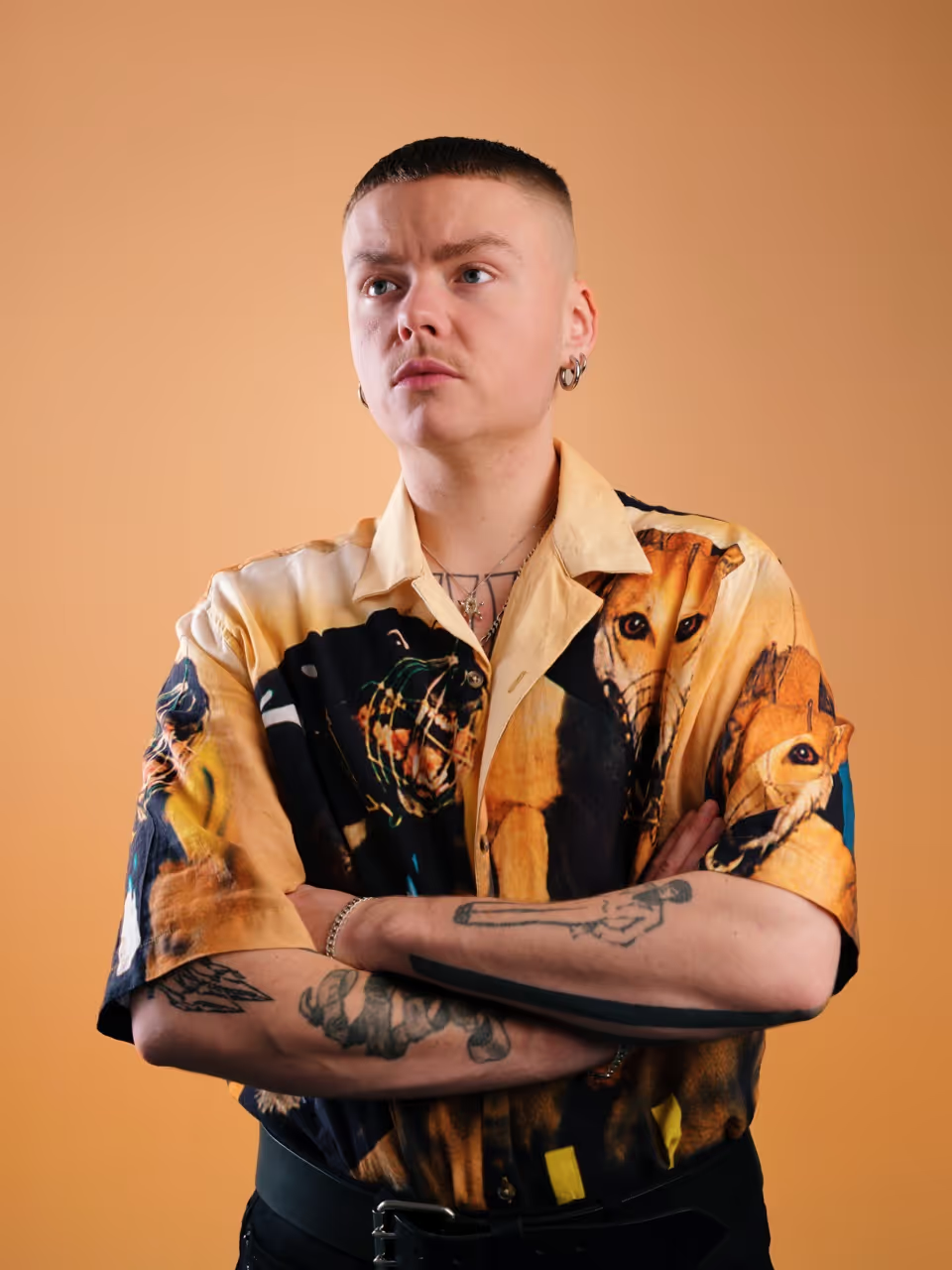
Julius Thissen (1993, the Netherlands) lives and works in Arnhem, NL. Their work investigates themes of community and representation, masculinity, sports, and competition. Originating from their background as a performance artist, Thissen's photographic practice aims to create narratives that explore the fine line between performing and failing. These themes are closely tied to contemporary performance-driven culture and the influence of societal expectations on behavior. Their work is deeply rooted in personal experiences as a genderqueer and transmasculine individual. Thissen strongly opposes the restrictive and often binary narratives imposed on transgender and queer individuals.
Thissen has been nominated for the Hendrik Valk Prize, Arnhemse Nieuwe, and the Warsteiner Blooom Awards. In 2023, they received the Artist Basis Fund and, more recently, a Mondriaan Fund Artist Project Grant for their new project Bones of Graphene, Skin of Kevlar.

Tim Rod is a Swiss artist based in Bern, Switzerland. He studied art education at HKB – Bern University of Applied Sciences (BA, 2018), art history at Bern University (Minor, 2019), photography at Vevey School of Photography (CEPV, ES diploma, 2021) and is currently pursuing a master’s degree in Contemporary Arts Practice at HKB – Bern University of Applied Sciences.
His work often explores issues related to exile and habitat, rootlessness and rootedness, as well as memory, identity, belonging and travelling. His own roots and family history are one of the central elements of his practice and his research, alongside collective visual culture. While his practice remains strongly rooted in photography, his works often expand into site-specific multimedia installations. His work has been exhibited since 2018 in Switzerland and internationally since 2021. Recent exhibitions include "L’Été sans fin" (Festival Images, Vevey, 2020), "Genesis" (Hackney Downs Studios, London, 2021), Charta Bookfestival (Rome, 2021), Photobook Award Encontros Da Imagem (Braga, Portugal, 2021), and the European Photobook Month (Hongkong, 2022). He has been nominated or shortlisted to several major Swiss and international awards. His project "Don’t forget the Knifish" was awarded the special mention of the near.prize 2021. The same year, he won the vfg Young Talent Award for Photography with the project "À demain inshallah".

Thana Faroq is a Yemeni photographer and educator based in the Netherlands. She works with photography, texts, sound, and the physicality of the image itself, as a way to respond to the changes that have been shaping and defining her life, and sense of belonging both in Yemen and the Netherlands. Thana's positioning as a photographer is informed by her reflections on her subject matter, tuning in to other people’s lived experiences with which she continually grows familiar. She also increasingly seeks her own story in the frame. Thana was a recipient of the 2018 inaugural Open Society Foundation Fellowship Grant and Exhibition and the 2019 Arab Documentary Fund supported by the Prince Claus Fund and Magnum Foundation and Zenith magazine reporting grant. In 2020, she published her first book, I don't Recognize Me in the Shadows The book was shortlisted for the Lucie Photobook Prize 2021, and it has also been listed as one of the Interesting Artist & Photographic Books for 2021 by the PhotoBook Journal. Thana received her BA in Government and International Relations from Clark University, and an MA in Photography and Society at The Royal Academy of Art, The Hague.

Yu Shuk Pui Bobby (b. 1994) is a visual artist based between Hong Kong and Oslo. With a collaborative approach to her practice, her work conjures the physical, tangible and affective phenomena associated with biotechnology through combinations of video, text, installation, sculpture, and performance. She often uses speculative fiction to tackle questions of human genetic engineering, reconfiguring perceptions of gender, body and historical discourses of identity. Bobby holds a BA from Hong Kong Baptist University and an MFA from Oslo National Academy of Fine Art. Her works have been in Hong Kong, Norway, Japan, China, Iceland and the USA.